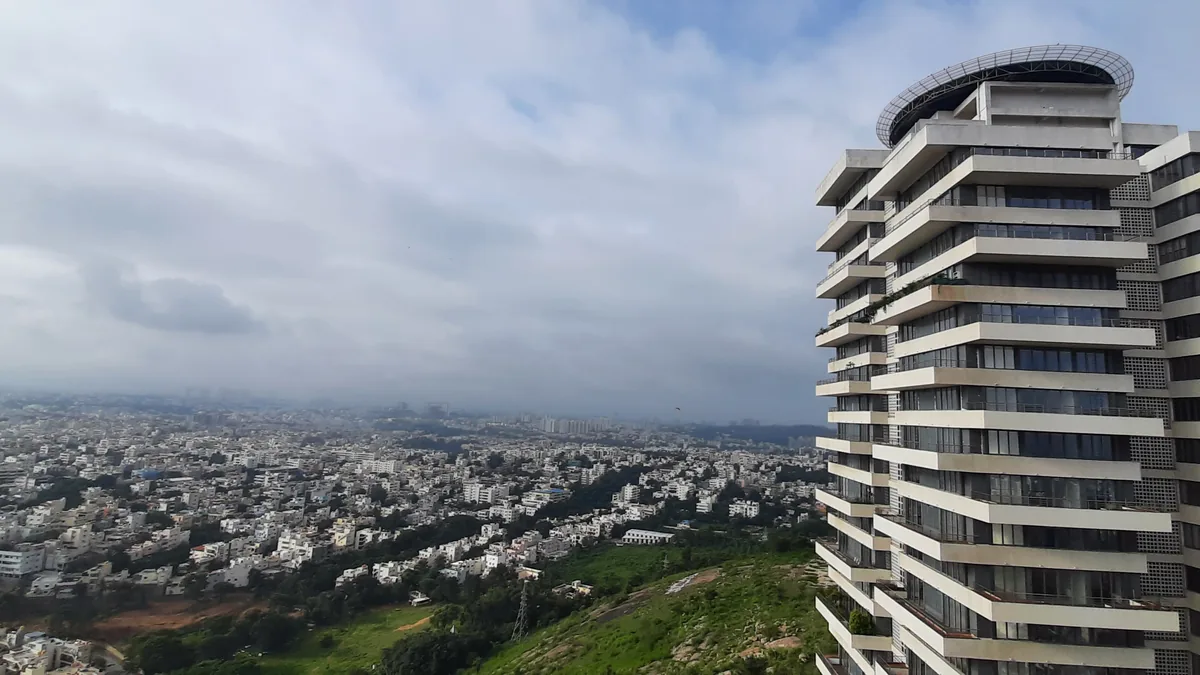
Photo: Shruti.morabad, Wikimedia Commons, CC BY-SA 4.0.
Direct Answer: Before paying an earnest money token on a resale apartment in Bengaluru, buyers must directly verify ten operational and financial checkpoints with the Apartment Owners Association (AOA) or Resident Welfare Association (RWA): (1) maintenance arrears and monthly billing rate on the specific flat; (2) pending or approved special capital expenditure levies (e.g., lift overhaul, STP retrofitting); (3) total sinking fund/corpus balance and designated scheduled bank account; (4) last 2 years of audited balance sheets and annual general meeting (AGM) minutes; (5) official association parking allocation register matching the seller's deed; (6) pet regulations and designated walking paths; (7) tenant leasing restrictions, bachelor curbs, or short-stay/Airbnb prohibitions; (8) active litigation involving the association, promoter, or civic authorities; (9) comprehensive building and common infrastructure fire insurance coverage; and (10) association transfer fees, share certificate issuance procedures, and NOC timelines.
Disclosure: acre&key's advice is free to buyers. We're an authorised sales partner for some projects and may be paid by the developer.
Buying into an established apartment community means inheriting its governance, balance sheet, and civic disputes alongside the physical walls. Formal transfer documentation is detailed in our guide on apartment association NOC for resale. Handover mechanics and campus litigation are covered in buying a resale where the association runs the campus. Parking space verification is mapped in our apartment parking rights checklist. For title deeds, encumbrance certificates, and agreement drafting, start with our master token and booking amount checklist and legal checks from title to OC.
Why you must question the association directly, not just the seller
A seller has a natural financial incentive to present the community in a favorable light. Common problems—such as a failing sewage treatment plant (STP) facing Karnataka State Pollution Control Board notices, a sinking fund emptied by diesel generator repairs, or ongoing litigation over unhanded builder corpus—rarely appear in sales brochures or casual conversations.
The Management Committee (President, Secretary, or Treasurer), writing from the association's official registered email or on formal letterhead, provides the true operational picture. If a committee insists it cannot disclose financial status to a prospective purchaser, request the seller to obtain an official Provisional Dues Statement and copy of the latest AGM minutes before executing the Agreement to Sell.
The ten essential association questions before paying a token
Work through these ten questions systematically before signing agreements or transferring non-refundable tokens:
| Due Diligence Area | Critical Question to Put to the Committee | Red Flag / Discrepancy Risk |
|---|---|---|
| 1. Maintenance Dues | What is the exact monthly maintenance fee for this unit, and what is the current outstanding balance/arrears? | The seller claims zero arrears, but the association ledger reveals Rs 1.5 lakh in unpaid dues and interest penalties. |
| 2. Special Sinking Levies | Has the General Body approved, or is it debating, any extraordinary capital levy for elevator replacements, facade repainting, or STP overhauls? | A planned special assessment of Rs 2 to 3 lakh per unit scheduled for approval at the upcoming AGM, which travels to the new buyer. |
| 3. Corpus & Sinking Fund | What is the total corpus balance, which scheduled bank holds the fixed deposits, and did the original builder transfer the full corpus? | The promoter never transferred the Rs 5-crore corpus fund, leaving the society in recurring cash deficits and litigation. |
| 4. Audited Accounts & AGM | May I review the last two audited balance sheets and the minutes of the last Annual General Meeting? | Recurring operating deficits, high maintenance default rates (>20% of owners not paying), or audit qualifications regarding missing funds. |
| 5. Parking Allocation Register | How is this flat's parking recorded in the association's master allocation register, and does the physical bay match the seller's deed? | The seller was using a neighbor's slot informally, or the slot is located in an unapproved fire-tender setback. |
| 6. Pet Bye-Laws & Animal Rules | What are the current association rules regarding companion animals, maximum pet limits, service lift use, and designated walking zones? | Restrictive or unlawful committee rules prohibiting pet ownership or banning dogs from passenger elevators. |
| 7. Tenancy & Short-Stay Rules | Does the association permit renting to non-family tenants, corporate guest houses, or short-term platforms like Airbnb? | Strict bye-laws banning bachelor tenants or imposing heavy extra "tenant move-in charges" (e.g., Rs 25,000 to 50,000 non-refundable). |
| 8. Active Litigation | Is the association, the building, or the builder involved in active suits before the City Civil Court, High Court, NGT, or Consumer Forum? | Active disputes regarding structural defects, Cauvery water access lines, encroachment claims, or withheld Occupancy Certificates. |
| 9. Building Structural Insurance | Does the association maintain an active comprehensive fire, earthquake, and third-party public liability insurance policy covering the structure? | Insurance lapsed years ago because the committee failed to renew policies, exposing all unit owners to uninsured disaster risk. |
| 10. Transfer Fees & NOC Timeline | What is the exact procedure, documented timeline, and administrative fee for issuing the final association No-Objection Certificate? | Arbitrary transfer fee demands exceeding statutory limits or long delays in issuing share certificates post-sale. |
Financial due diligence: distinguishing operational vs reserve funds
When reviewing the association's audited financial statements, examine two distinct fund categories: 1. Operating / Maintenance Fund: Collected monthly (typically based on square footage or flat rates) to pay for daily security, housekeeping, lift maintenance contracts (AMCs), diesel generator fuel, and common electricity bills. If annual operating expenses regularly exceed collections, the association is running a structural deficit. 2. Sinking Fund / Sinking Reserve: A long-term statutory capital reserve dedicated to major periodic overhauls—replacing lift traction motors, waterproofing common terraces, rewiring electrical panels, and repainting exterior facades. A healthy society should maintain substantial multi-year sinking reserves banked in scheduled commercial bank fixed deposits.
Interactive Association Due Diligence Checklist
Use this interactive 10-step checklist to verify community governance, association finances, and bye-law rules before issuing a resale property token:
Interactive Due Diligence Checklist
Track your association verification steps. Check items off as completed:
Frequently asked questions
A seller may not disclose pending maintenance arrears, upcoming capital levies, or neighbor disputes over parking. Contacting the association directly confirms true monthly running costs, pending financial liabilities, and operational rules before signing binding contracts.
No. An association NOC is an administrative clearance confirming zero outstanding maintenance dues and verifying association records. It does not certify legal title, encumbrance status, or validity of parent purchase deeds, which must be directly verified by a property advocate.
Under standard apartment association bye-laws, maintenance dues attach to the specific apartment unit. If the seller exits without clearing outstanding arrears, the association will demand payment from the new buyer and may suspend water, electricity backup, or clubhouse access until cleared.
Many associations levy administrative transfer charges ranging from Rs 10,000 to Rs 50,000. While excessive demands have been challenged in consumer forums and cooperative courts, buyers should clarify the exact fee in advance and determine whether the buyer or seller pays under the agreement.
Ask the association treasurer for the formal "Handover Agreement" and bank statement showing the transfer of interest-free maintenance security deposits (IFMS) and sinking funds from the developer to the registered association's account.
Look for recurring debates regarding failing sewage treatment plants (STP), elevator breakdown frequencies, security service deficiencies, builder non-compliance, water tanker spending spikes, or disputes regarding parking reassignments.
No. Under guidelines from the Animal Welfare Board of India (AWBI) and repeated High Court rulings, resident welfare associations cannot pass bye-laws banning companion pets or restricting animals from using passenger elevators.
If the sale deed contains vague language (e.g., "one car park as allotted"), inspect the association's official Master Parking Register and request a written endorsement confirming the specific bay number permanently assigned to that unit.
While some associations pass internal resolutions attempting to ban unmarried or bachelor tenants, such restrictions lack statutory backing under property ownership laws. However, buying into an association with aggressive anti-tenant bye-laws creates persistent tenant friction.
A preliminary dues position should be confirmed before paying an advance token, and the final stamped No-Dues Certificate / NOC must be collected 3 to 5 days prior to sale deed registration, with a final meter reading taken on handover day.
Lawyer note: The information provided on this page is for educational and procedural guidance under Indian property and apartment ownership legislation and does not constitute formal legal counsel. Resolving association disputes, illegal transfer fee demands, or pending builder litigation requires review by a practicing property advocate. Obtain qualified legal verification prior to paying booking deposits.
CA note: Maintenance payments, transfer fees, and sinking fund contributions paid to an apartment association do not qualify for direct home loan tax deductions. However, capital expenditure levies incurred toward major property improvements may form part of capital cost adjustments under Section 48 of the Income-tax Act. Consult a chartered accountant for specific tax planning.
Sources
Checked 18 Nov 2026.
-
Karnataka Apartment Ownership Act, 1972 and Karnataka Apartment (Ownership and Management) Act, 2026: https://dpal.karnataka.gov.in/
-
Animal Welfare Board of India (AWBI) Guidelines on Pet Ownership in Housing Societies: https://awbi.gov.in/
-
Karnataka Real Estate Regulatory Authority (K-RERA) Society Handover Guidelines: https://rera.karnataka.gov.in/
-
Kaveri Online Services Portal, Department of Stamps and Registration: https://kaveri.karnataka.gov.in/