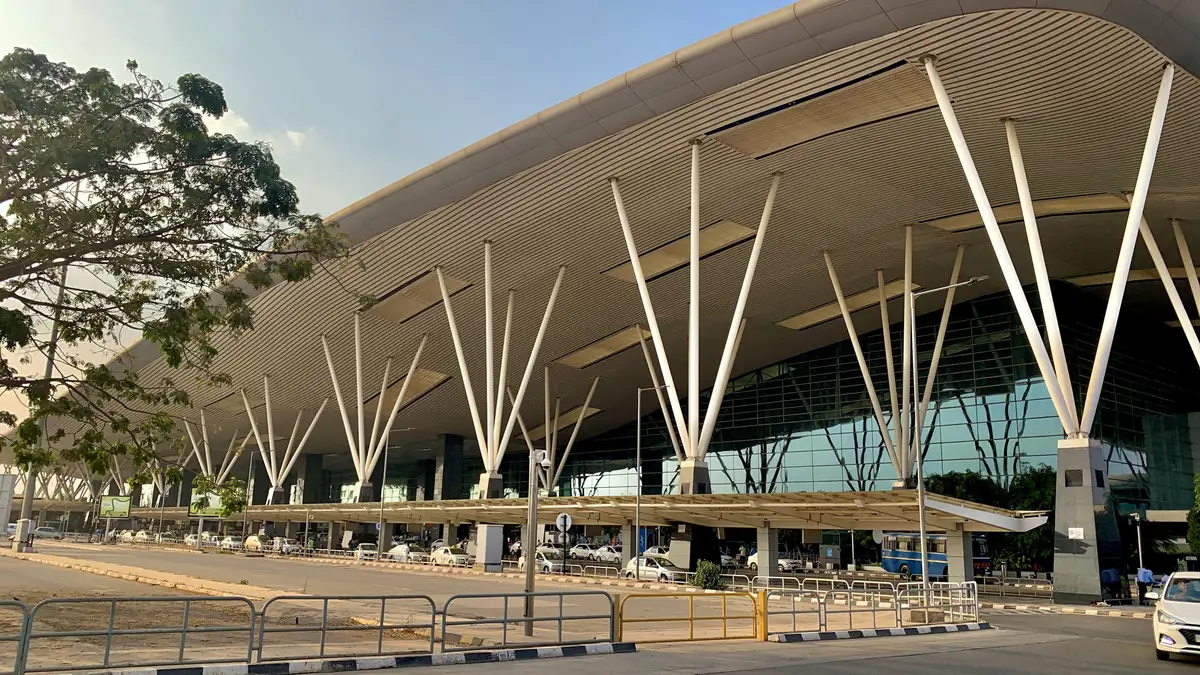
Photo: Adil Jamal, Wikimedia Commons, CC BY-SA 4.0.
Direct Answer: Taking over facility maintenance and corpus funds from a builder in Bengaluru requires an audit-backed transition protocol rather than an informal ceremony. Under Section 17 of the Real Estate (Regulation and Development) Act, 2016, and the upcoming frameworks of the Karnataka Apartment (Ownership and Management) Act, 2026 (KAOMA), the promoter is legally obligated to transfer all common areas, original project drawings, and accumulated funds to the registered Apartment Owners Association (AOA). The handover comprises four pillars: (1) **Financial:** Audited flat-wise reconciliation and scheduled bank transfer of the Interest-Free Maintenance Security Deposit (IFMS), sinking fund, and surplus maintenance collections with accrued interest; (2) **Statutory & Utility:** Formal transfer of BESCOM common meter deposits, BWSSB bulk water meters, fire clearance certificates, and KSPCB Consent for Operation (CFO); (3) **Engineering:** Handover of structural/MEP as-built drawings, warranties, and vendor Annual Maintenance Contracts (AMCs) for lifts, transformers, and STPs; and (4) **Legal:** Execution of a formal Handover Agreement without signing blanket liability waivers while defect liability periods remain active.
Disclosure: acre&key's advice is free to buyers. We're an authorised sales partner for some projects and may be paid by the developer.
A structured handover protects thousands of residents from sudden financial deficits or catastrophic equipment failures. Statutory handover rights are detailed in our guide on when a builder must hand over khata, meters and corpus in Karnataka. The legislative transition under the new law is analyzed in what a 60-day handover clock means under KAOMA. For individual homeowner due diligence, review the first 90 days after buying a flat. Structural defects and builder warranty obligations are governed by the defect liability under RERA Karnataka guide.
The four core pillars of an apartment community handover
A successful builder-to-association handover divides into four distinct operational workstreams:
| Handover Pillar | What Must Be Transferred | Critical Verification Check |
|---|---|---|
| 1. Financial Assets & Sinking Fund | Interest-Free Maintenance Security Deposit (IFMS), sinking fund, common facility advance collections | Audited, flat-wise ledger from a Chartered Accountant; fixed deposits transferred directly to association bank account |
| 2. Utility Accounts & Civic Deposits | BESCOM high-tension (HT) transformer account, BWSSB bulk water meters, diesel generator storage permits | Official name change and security deposit transfers endorsed by utility authorities |
| 3. Engineering Assets & Machinery | Elevators, Sewage Treatment Plant (STP), Water Treatment Plant (WTP), fire pumps, backup generators | Physical audit of machinery by a third-party MEP consultant; original OEM manuals, warranties, and active AMCs |
| 4. Architectural & As-Built Plans | Structural drawings, electrical cable layout, plumbing schematics, municipal sanctioned plans | Physical original blueprints or authenticated CAD files, not low-resolution promotional marketing PDFs |
Never Sign a Blanket "No-Claims" Discharge
A frequent trap occurs when promoters condition the release of the corpus fund on the association signing an absolute "No Further Claims / Clean Handover Agreement." - Under Section 14(3) of RERA, 2016, the promoter remains legally liable to rectify structural defects and workmanship flaws for five years from the date of handing over possession. - The association must ensure the handover deed explicitly records that accepting physical custody of common equipment does not extinguish the builder's statutory 5-year defect liability obligations.
Financial handover: tracking the corpus, interest, and utility deposits
When taking control of society finances, the Management Committee must demand full accounting transparency:
- Flat-Wise Sinking Fund Reconciliation: Demand an itemized schedule listing every apartment unit, the exact corpus amount collected at sale, collection dates, and accrued interest. Any uncollected corpus from unsold developer units must be fully deposited by the promoter.
- Maintenance Account Audit: If the developer managed facility maintenance during the transition period, request an audited income and expenditure statement. Builders cannot subsidize unsold inventory expenses from resident maintenance funds.
- BESCOM & BWSSB Deposits: Developers pay substantial capital deposits to BESCOM for HT yard installations and to BWSSB for Cauvery water connections. The association must receive the original deposit receipts and initiate formal name-transfer procedures to ensure utility refunds or adjustments credit the society directly.
Engineering audit: testing plant and machinery before acceptance
Do not accept physical keys without a third-party technical inspection. Form a resident technical committee or hire a qualified MEP engineering auditor to evaluate: - Sewage Treatment Plant (STP): Verify that the biological reactor (MBR/SBR) is fully stabilized, operating at designed hydraulic capacity, and that treated effluent meets KSPCB discharge standards for BOD, COD, and TSS. Inspect the active Consent for Operation (CFO). - Elevators: Verify valid operating licenses from the Karnataka Electrical Inspectorate, emergency rescue device (ARD) functionality, intercom connectivity, and active OEM maintenance agreements. - Fire-Fighting Systems: Perform live wet tests of booster pumps, diesel auxiliary pumps, dry riser pipes, basement sprinkler loops, and smoke evacuation dampers. - Common Terrace Waterproofing: Inspect the entire top roof slab and expansion joints for thermal cracks or ponding water before monsoon handover.
Interactive Builder Handover Checklist
Use this interactive 10-step checklist to guide your Apartment Owners Association through taking over maintenance, plant rooms, and corpus funds:
Interactive Due Diligence Checklist
Track your builder handover milestones. Check items off as verified:
Frequently asked questions
Under Section 17 of RERA, 2016, the promoter must hand over physical possession of common areas and all title documents to the association of allottees within a reasonable timeline post-Occupancy Certificate. The Karnataka Apartment (Ownership and Management) Act, 2026 establishes a strict 60-day statutory handover clock once formally commenced.
The corpus fund (or Interest-Free Maintenance Security Deposit) is capital collected from buyers to finance long-term property replacements and capital reserves. The promoter holds these funds in trust and must transfer the entire principal along with accrued bank interest earned during the pre-handover period.
If a developer delays or refuses to transfer the corpus, the association can file a formal complaint before the Karnataka Real Estate Regulatory Authority (K-RERA) under Section 17 and Section 31. K-RERA routinely issues binding recovery orders compelling promoters to transfer funds with penal interest.
No. Under Section 14(3) of RERA, 2016, the promoter remains legally liable to rectify structural and workmanship defects for five years from the date of handing over possession. Signing an operational handover document does not extinguish this statutory obligation, provided the association does not sign an unlawful waiver clause.
As-built drawings reflect the true post-construction positioning of concealed electrical conduits, structural rebar, underground plumbing lines, and rainwater recharge sumps. Without these drawings, the association cannot troubleshoot subterranean pipeline leaks, conduct electrical repairs, or perform structural maintenance.
The promoter is legally responsible for paying all municipal taxes, electricity charges, and water bills incurred up to the date of handing over physical possession and management to the association of allottees under Section 11(4)(g) of RERA.
The association must obtain the original security deposit receipts from the builder, execute Form 3 (Transfer of Electricity Connection), attach a copy of the registered association certificate and deed of declaration, and submit the application to the local BESCOM sub-division.
The developer is legally required to pay regular monthly maintenance fees and their proportionate contribution to the sinking fund for every unsold or unallotted apartment unit from the date the Occupancy Certificate is issued.
A Consent for Operation is an official environmental permit granted by the Karnataka State Pollution Control Board (KSPCB) authorising the operation of the Sewage Treatment Plant. The CFO is subject to periodic renewal (typically every 1 to 5 years) and requires regular water quality test submissions.
Yes. Many proactive associations commission an external structural, electrical, and plumbing (MEP) audit before accepting formal handover. The resulting technical audit report serves as legal documentation for rectifications under RERA Section 14(3).
Lawyer note: The information provided on this page is for educational and procedural guidance under Indian property, municipal, and real estate legislation and does not constitute formal legal counsel. Drafting handover agreements, enforcing corpus recoveries, or preserving RERA defect liability claims requires review by a practicing property advocate. Obtain qualified legal counsel before signing discharge documents.
CA note: Corpus funds and sinking reserves transferred from a builder do not constitute taxable income for the association under the principle of mutuality. However, interest accrued on fixed deposits is taxable under the Income-tax Act. Consult a chartered accountant for tax planning and association audit filings.
Sources
Checked 18 Nov 2026.
-
Real Estate (Regulation and Development) Act, 2016, Sections 11, 14, and 17 (Promoter obligations, defect liability, and handover): https://rera.karnataka.gov.in/resources/staticpage/Real_Estate_Act.pdf
-
Karnataka Apartment (Ownership and Management) Act, 2026 (Act 45 of 2026), Handover Mandates: https://prsindia.org/files/bills_acts/acts_states/karnataka/2026/Act45of2026KA.pdf
-
Karnataka State Pollution Control Board (KSPCB) STP Consent Guidelines: https://kspcb.karnataka.gov.in/
-
Bangalore Electricity Supply Company Limited (BESCOM) Meter Transfer Rules: https://bescom.karnataka.gov.in/