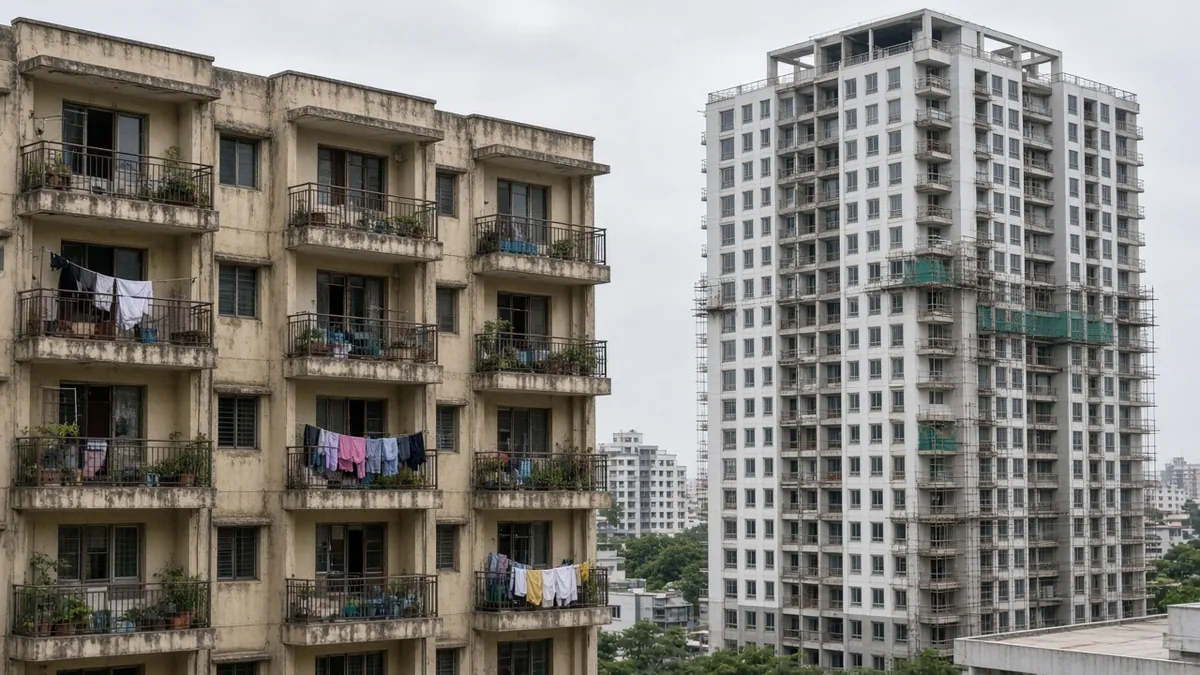
Short answer: Gated community vs standalone apartment isn't only about pools and guards. In Bengaluru, a small standalone building may not need RERA registration at all, so you lose its protections. Gated projects carry bigger shared systems, like STPs, and fixed costs spread over more flats. Check the legal status, land share and running costs, not the brochure.
- RERA can skip small buildings: no registration is needed for land up to 500 sq m or up to eight flats (RERA s.3(2)(a)).
- Land share can be similar: a small plot with few flats can give each owner as much undivided share as a large gated project.
- Shared systems scale up: sewered projects with more than 120 flats making over 80 KLD need their own STP.
- Fixed costs spread: a guard team that costs each flat ₹4,000 a month in a 20-flat building costs ₹200 in a 400-flat one, before amenities.
- Association law matters in both: ask which law the owners' body will be formed under.
- Our SCALE check: security, common costs per flat, approvals and RERA, land share, engineering and exit.
- What counts as each?
- Does RERA cover a standalone building?
- Worked example 1: is this building RERA-exempt?
- How much land do you own in each?
- Worked example 2: land share per flat
- What shared systems does each need?
- How do running costs compare?
- Who runs the building?
- Which suits which buyer?
- The SCALE check (our framework)
- Checklist before choosing
- What mistakes do buyers make?
- What should you do if...
- Method notes and limits
- Related reading
- Frequently asked questions
- Talk it through with acre&key
- Sources
Most comparisons of gated communities and standalone buildings stop at amenities and security. Those matter, but they're easy to see on a site visit. What's harder to see are the legal and running-cost differences that show up years later: whether the building is covered by RERA, how much land you own, who runs the sewage plant, and how the bills are split. This guide covers those.
What counts as each?
There's no legal definition of either term. In practice:
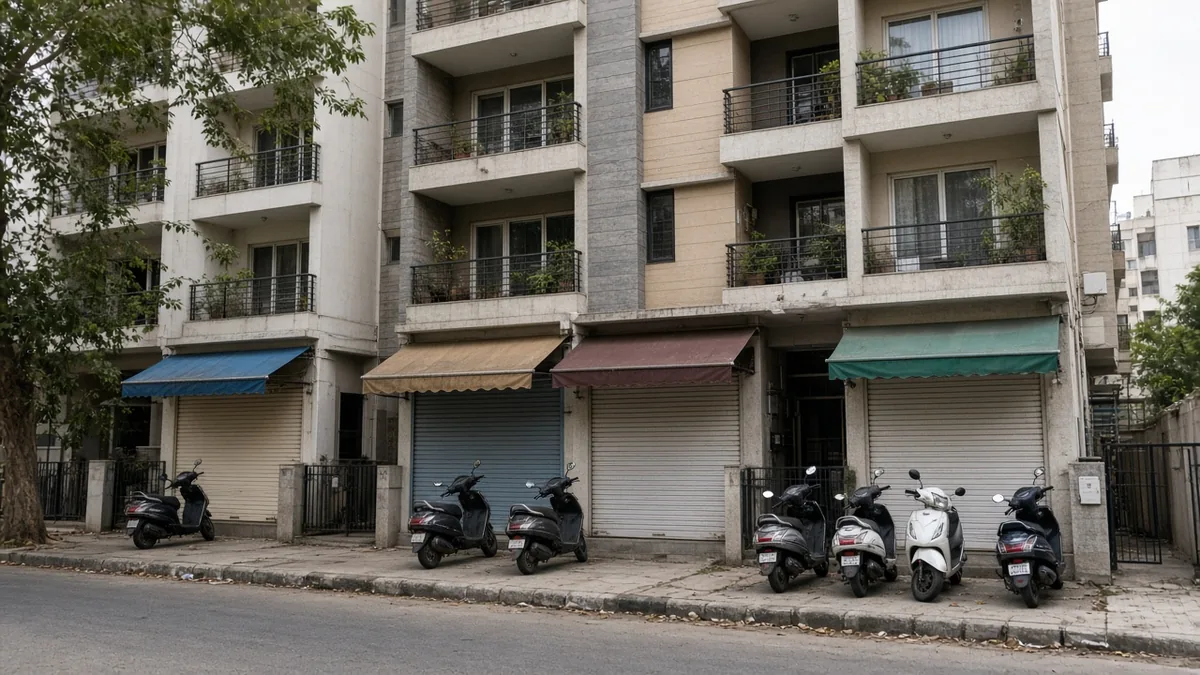
- Standalone building: one block on a single plot, often in an established locality, with a lift, parking and few shared facilities.
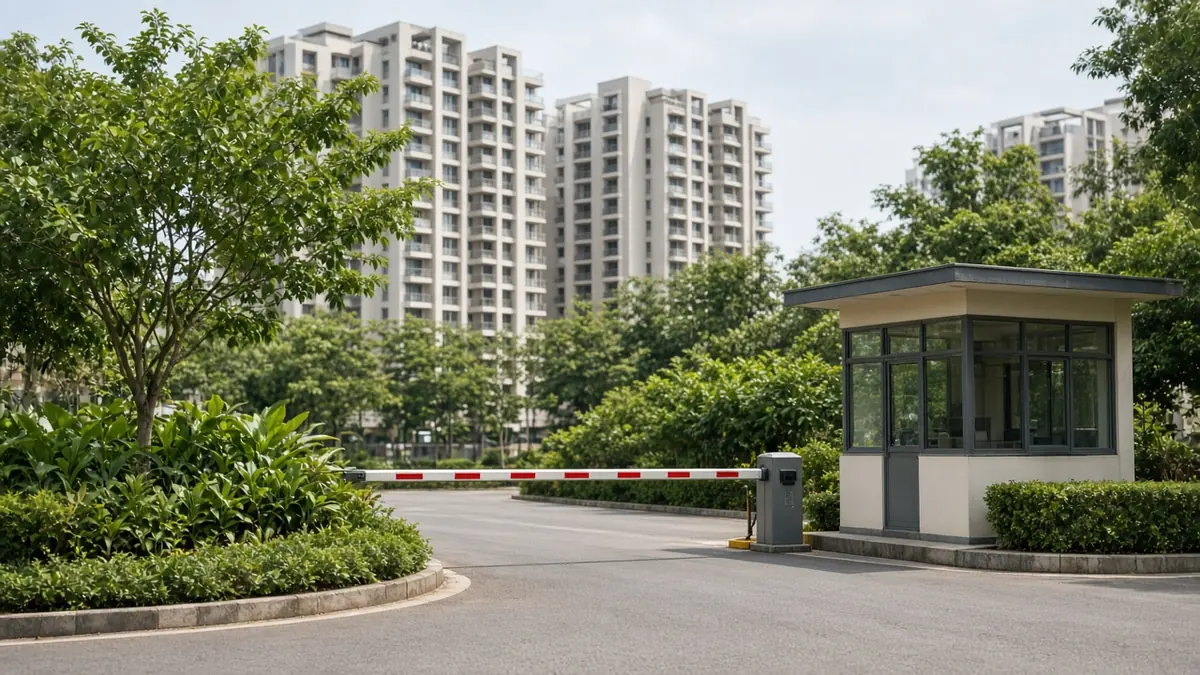
- Gated community: several blocks or many flats on a larger, walled site with controlled entry, a clubhouse and shared services.
The legal rules depend on size, not on the label. So look at the plot area, the number of flats and the approvals.
Does RERA cover a standalone building?
Not always. Under RERA s.3(2)(a), a project doesn't need registration where the land "does not exceed five hundred square meters or the number of apartments proposed to be developed does not exceed eight inclusive of all phases". The Act lets states lower these thresholds; check K-RERA for Karnataka's current position (RERA Act).
Without registration, you lose the RERA protections that come with it: interest or refund for delay under s.18, the five-year defect liability under s.14(3), the 10% advance cap under s.13, and quarterly progress filings. You'd fall back on your agreement, consumer law and the civil courts.
| Registered project (most gated communities) | Unregistered small building | |
|---|---|---|
| Delay remedy | RERA s.18 interest or refund | Agreement terms; consumer forum or civil court |
| Defect liability | Five years from possession (s.14(3)) | Whatever the agreement says |
| Advance cap | 10% before registered agreement (s.13) | No RERA cap |
| Public filings | Plans, approvals, quarterly updates on K-RERA | None on K-RERA |
Check any project on the portal before you pay; our RERA check guide shows how.
Worked example 1: is this building RERA-exempt?
| Building | Plot | In sq m | Flats | Registration needed? |
|---|---|---|---|---|
| A | 4,000 sq ft | 371.6 | 8 | No: under 500 sq m and eight flats or fewer |
| B | 4,000 sq ft | 371.6 | 12 | No: plot under 500 sq m, even with 12 flats |
| C | 6,000 sq ft | 557.4 | 8 | No: eight flats or fewer |
| D | 6,000 sq ft | 557.4 | 12 | Yes: over both thresholds |
The test is "or", so a building is exempt if either limit is met. That covers many standalone buildings in the city's older layouts. Convert sq ft to sq m by dividing by 10.764.
How much land do you own in each?
In both formats you own an undivided share (UDS) of the land with the other owners. What matters is the share per flat, not the size of the project.
Worked example 2: land share per flat
| Standalone | Gated community | |
|---|---|---|
| Land | 4,000 sq ft | 10 acres (4,35,600 sq ft) |
| Flats | 8 | 800 |
| Average UDS per flat | 500 sq ft | 544.5 sq ft |
Illustrative figures. A small building can give you nearly the same land share as a large project. In practice, UDS is split by flat size, so read the schedule in your sale deed. Our answer on UDS explained and our villa and UDS guide go further. Land share matters most at redevelopment, decades away, when owners decide together what happens to the plot. Eight owners agree more easily than 800, though each case differs.
What shared systems does each need?
Sewage. Under Karnataka's 12 March 2024 rules, as reported by The Hindu (news), residential projects in sewered areas with more than 120 units generating more than 80 KLD need an in-situ STP. Where there's no sewer line, the threshold is 20 or more units. So a large gated project usually runs its own plant, and a small standalone building on a sewer line usually doesn't. An STP needs consents, operators and testing; see our answer on STP and borewell checks.
Water. Both depend on BWSSB supply where it reaches, plus borewells and tankers. Bigger projects use more and may lean harder on tankers. Our water questions guide lists what to ask.
Lifts and generators. Both have them. A gated project may have dozens; each needs an annual maintenance contract (lift and DG AMC at handover).
How do running costs compare?
Bigger projects spread fixed costs over more flats, but they also add amenities that cost money to run. An illustration with a security team costing ₹80,000 a month:
| 20-flat standalone | 400-flat gated | |
|---|---|---|
| Security cost per month | ₹80,000 | ₹80,000 (one team; large sites need more) |
| Per flat | ₹4,000 | ₹200 |
Real budgets differ. A large site needs more guards, a clubhouse, a pool, landscaping and an STP. A small building may get by with one watchman. So ask for the association's actual budget or accounts, divide by the number of flats, and compare per flat, per month. For a new project with no accounts yet, ask the builder for the projected budget and the corpus or sinking-fund deposit at handover.
Who runs the building?
In a registered project, RERA says the promoter must enable the formation of an association of allottees under the applicable law (s.11(4)(e)), and must convey the common areas to it with each flat's undivided share (s.17). The Karnataka Apartment Ownership Act 1972 applies where the owners submit the property to it by a registered declaration. Ask which law the association will be formed under, and when. In a small resale building, ask to see the association's registration, bye-laws and recent minutes, if there's a formal body at all.
Which suits which buyer?
- Families with young children often value internal roads, play areas and controlled entry, which point to a gated project. Check the real maintenance bill before you count on it.
- People who want a short commute in an older locality will find more standalone buildings there. Check RERA status, the association and the building's age.
- Investors should compare rent per flat against maintenance per flat. A high maintenance bill comes off your yield every month.
- Older buyers may want lifts with backup power, step-free access and a well-run association more than a pool. Either format can offer that, or fail to.
The SCALE check (our framework)
- S: Security and access. Who controls entry, and what does it cost per flat?
- C: Common costs per flat. Actual budget or accounts divided by the number of flats, plus corpus.
- A: Approvals and RERA. Is the project registered? If exempt, what does your agreement promise instead?
- L: Land share. UDS per flat from the sale deed schedule.
- E: Engineering and exit. STP, lifts, water source, and how easy the flat will be to sell later.
Checklist before choosing
- [ ] RERA registration checked; if exempt, the reason noted
- [ ] Plot area and number of flats confirmed from the sanctioned plan
- [ ] UDS per flat from the agreement or deed schedule
- [ ] Association law, registration and bye-laws checked
- [ ] Monthly maintenance per flat from accounts or the builder's budget
- [ ] Corpus or sinking fund amount known
- [ ] STP need and condition checked
- [ ] Water source confirmed: BWSSB, borewell, tankers
- [ ] Lift and generator contracts seen
- [ ] OC and khata status confirmed
What mistakes do buyers make?
- Assuming every new building is RERA-registered. Small ones may be exempt.
- Comparing maintenance per sq ft without knowing what it covers.
- Ignoring UDS because "it's a flat, not land".
- Overlooking the STP. It's a running cost and a compliance duty for the owners.
- Skipping the association's records in a resale standalone building.
- Paying for amenities you won't use, or giving up ones you will.
What should you do if...
...a small new building isn't RERA-registered? Check whether it meets the exemption. If it does, get delay, defect and refund terms written into your agreement, and have a lawyer review it.
...maintenance in a gated project seems high? Ask for the budget line by line. Security, STP and amenity staff are usually the biggest items.
...a standalone building has no formal association? Ask how common costs, repairs and the lift contract are handled, and who signs for the building.
...you're comparing a gated villa with a flat? See our answer on gated villas vs apartments.
...you're buying resale in either format? Read our resale vs new comparison and inspect the building with our site visit checklist.
Method notes and limits
- RERA points are from the Act's text. STP thresholds are from Karnataka's March 2024 rules as reported by The Hindu (news).
- Plot sizes, flat counts, UDS and security costs are illustrative. We don't quote typical maintenance rates because they vary too widely to be useful.
- We haven't confirmed whether Karnataka has lowered the RERA exemption thresholds; check K-RERA.
- We don't name projects or builders.
Lawyer note: RERA status, UDS and association law are legal questions. Have a property lawyer review the plan, agreement and deed schedule before you pay.
Related reading
Frequently asked questions
Neither is better in general. Gated projects usually offer RERA coverage, amenities and controlled entry at a higher running cost. Standalone buildings are often more central with lower costs, but small ones may be exempt from RERA.
Not if the land is 500 sq m or less, or there are eight flats or fewer, under RERA s.3(2)(a). States can lower these limits, so check K-RERA.
Often, because there are fewer services. But fixed costs are split among fewer flats. Compare the actual budget per flat, not the rate per sq ft.
Not necessarily. Land share depends on plot area divided by flats. A large project can give a similar share to a small building.
In sewered areas, only if it has more than 120 units producing over 80 KLD. Where there's no sewer line, 20 or more units need one.
The owners' association, once formed. In a registered project, the builder must enable its formation and hand over the common areas. Ask which law it's formed under.
It depends on location and condition more than format. A well-run building in a good locality sells, gated or not.
RERA status, the sanctioned plan's plot area and flat count, UDS per flat, and the maintenance budget per flat.
Sources
- Real Estate (Regulation and Development) Act, 2016, ss. 3(2), 11(4)(e), 13, 14, 17, 18 (India Code): https://www.indiacode.nic.in/handle/123456789/2158
- Karnataka Apartment Ownership Act 1972 (PRS India copy): https://prsindia.org/files/bills_acts/acts_states/karnataka/1973/1973KR17.pdf
- The Hindu, Karnataka makes in-situ STP mandatory for complexes with over 120 apartments (news): https://www.thehindu.com/news/cities/bangalore/water-woes-karnataka-amends-law-makes-in-situ-stp-mandatory-for-residential-complex-in-bengaluru-with-over-120-apartments/article67997490.ece