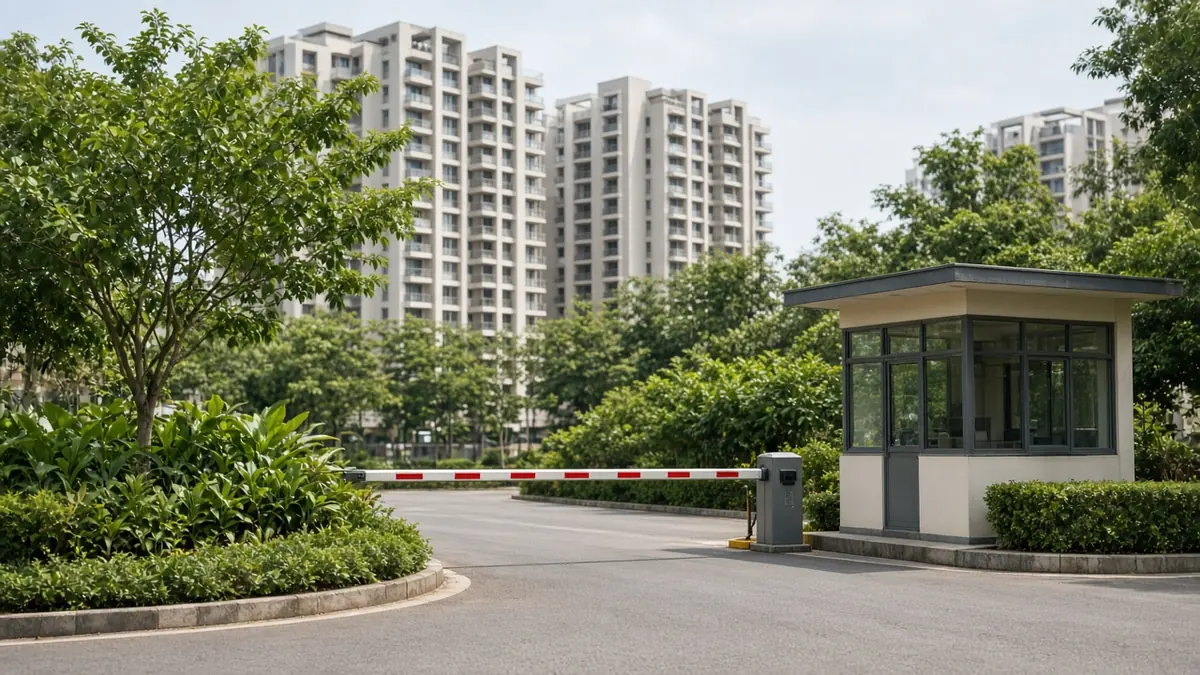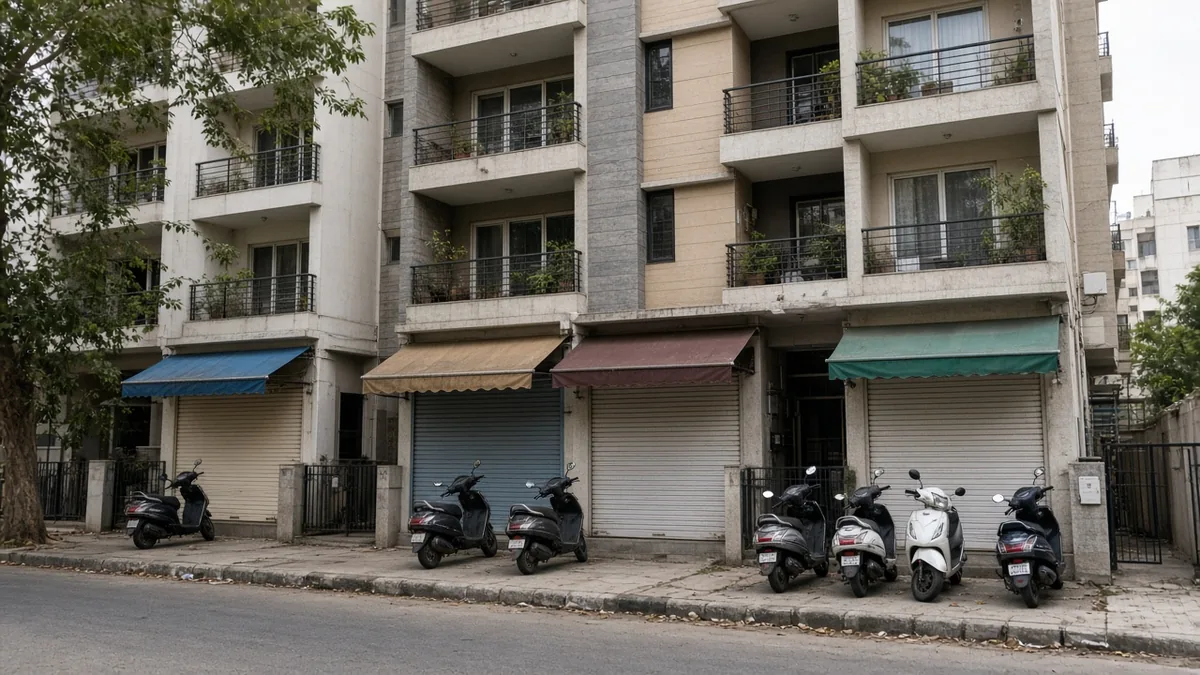
Short answer: Commercial vs residential property investment changes more than the rent. A shop or office usually yields more, but loans are smaller and costlier, rent can attract 18% GST, and vacancies last longer. A flat yields less but gets home-loan terms, RBI's loan caps and, if it's your home, reinvestment relief when you sell.
- Yield vs vacancy: in our example, the shop's net yield is 5.6% against the flat's 3.0%, but one empty quarter in three years takes a twelfth off the shop's rent.
- Loans differ: RBI's 90/80/75% caps are for housing loans. Lenders set commercial terms themselves, typically lower amounts at higher rates.
- Rent GST: residential rent for living is generally exempt; commercial rent can attract 18% depending on who's registered.
- Income tax: rent from either is "house property" income with a 30% standard deduction, but the self-occupied home loan benefit is for homes only.
- Selling: s.82 relief is only for a residential house; a shop sale falls under s.86, which asks you to invest the net sale price, not just the gain.
- Our YIELD check: your real yield, idle months, exit, leverage, due diligence.
- What changes, at a glance
- How do the loans differ?
- Worked example 1: yield after costs
- Worked example 2: what leverage does to cash flow
- How is rent taxed?
- What happens when you sell?
- What about RERA and approvals?
- Who does each suit?
- The YIELD check (our framework)
- Checklist before buying commercial as an individual
- What mistakes do buyers make?
- What should you do if...
- Method notes and limits
- Frequently asked questions
- Talk it through with acre&key
- Sources
Individuals in Bengaluru increasingly ask whether a shop or small office would earn more than a second flat. On headline yield it often does. But the two are treated differently by lenders, tax law and the rules on use, and those differences change the return you actually keep. This guide sets them side by side for someone buying in their own name, not through a company.
What changes, at a glance
| Area | Residential flat | Commercial unit (shop or office) |
|---|---|---|
| Loan | Home loan; RBI caps at 90/80/75% of value | Lender's own terms; often lower share, higher rate, shorter tenure |
| GST on purchase (under construction) | 5%, or 1% if affordable | Different rules apply; ask your CA |
| Stamp duty and registration | About 7.6% of higher of price and guidance value | Charged on conveyance the same way; guidance value lines can differ |
| GST on rent | Generally exempt for residential use | Can be 18%, depending on registration of landlord and tenant |
| Income tax on rent | House property; 30% standard deduction | Same head, same deduction, in a plain letting |
| Home loan tax benefit | Self-occupied interest up to ₹2 lakh (old regime) | Not available for self-occupation benefit |
| Reinvestment relief on sale | s.82: invest the gain in a house | s.86: invest the net sale price in a house |
| RERA | Covered if the project is registered | Covered too; commercial projects register |
| Use rules | Residential zone, domestic utilities | Zoning, trade licence, commercial utility tariffs |
How do the loans differ?
RBI's loan-to-value caps (90% up to ₹30 lakh, 80% from ₹30 to ₹75 lakh, 75% above) are set for individual housing loans in its Master Circular on Housing Finance (RBI). Commercial property is financed on lenders' own terms. Tata Capital, for example, describes commercial property loans as having higher rates, shorter tenures and LTV up to 70% (Tata Capital). Ask several lenders; terms vary widely.
Worked example 1: yield after costs
Two ₹1 crore purchases, both let. Illustrative figures.
| Flat | Shop | |
|---|---|---|
| Monthly rent | ₹30,000 | ₹60,000 |
| Annual rent, fully let | ₹3,60,000 | ₹7,20,000 |
| Allowance for vacancy | None (assume steady tenant) | One month a year (three months every three years) |
| Rent received | ₹3,60,000 | ₹6,60,000 |
| Maintenance (₹4,000 / ₹6,000 a month) | ₹48,000 | ₹72,000 |
| Property tax (assumed) | ₹10,000 | ₹25,000 |
| Net before income tax | ₹3,02,000 | ₹5,63,000 |
| Net yield | 3.0% | 5.6% |
The shop still wins here, even after a month's vacancy a year. But a commercial tenant can leave for six months or more, and every extra empty month costs ₹60,000. Our rental yield guide has residential yields by area. We don't have a comparable public series for commercial units, so test the rent with local brokers and actual leases.
Worked example 2: what leverage does to cash flow
Same two units, financed. The flat takes the RBI maximum of 75% at an illustrative 8.5%. The shop gets 60% at an illustrative 10%. Interest only, first year.
| Flat | Shop | |
|---|---|---|
| Loan | ₹75,00,000 | ₹60,00,000 |
| Your own money | ₹25,00,000 | ₹40,00,000 |
| Interest, year one | ₹6,37,500 | ₹6,00,000 |
| Rent received | ₹3,60,000 | ₹6,60,000 |
| Rent minus interest | −₹2,77,500 | +₹60,000 |
The flat needs ₹2.78 lakh a year from your pocket before principal and costs. The shop roughly covers its interest, but needs ₹15 lakh more of your own money upfront, plus 7.6% charges on either. Neither is "better": it depends on whether you have cash or income to spare.
How is rent taxed?
Income tax. Rent from a building you simply let out is taxed as income from house property, whether it's a flat or a shop. You get a 30% standard deduction under s.22(1)(a) of the Income-tax Act, 2025, and interest on a loan for a let-out property is deductible under the rules in s.22 (see our answer on home loan tax benefits). If you provide services with the space, the income can be treated differently; that's a CA question.
GST. Renting a home for residential use is generally exempt. Renting commercial property is generally taxable at 18%, and who pays depends on whether the landlord and tenant are registered: since October 2024, a registered tenant pays under reverse charge when the landlord is unregistered, with a later carve-out for tenants under the composition scheme (TaxGuru summary). A landlord whose turnover crosses the GST threshold must register. Get a CA's view before signing the lease.
What happens when you sell?
Both are long-term after 24 months and taxed at 12.5% (with an indexation option for residents who bought before 23 July 2024). The reinvestment relief differs:
- Flat: s.82 exempts the gain if you buy a home costing at least as much as the gain, within the time limits. See selling to upgrade.
- Shop: s.86 applies to assets other than a residential house. It asks you to invest the net sale consideration, not just the gain, for full relief, and has conditions about other houses you own. The Income Tax Department's s.86 page sets out the windows.
So if you plan to sell a shop and buy a home later, the relief needs more money reinvested. More on gains in our capital gains guide.
What about RERA and approvals?
RERA covers commercial projects as well as homes. A registered commercial project files plans, approvals and quarterly updates on K-RERA, and you get the same delay and defect remedies (how to check a project).
Approvals matter more for commercial units. Check that the building's sanctioned plan and occupancy certificate allow commercial use, that the land use permits it, and that the khata reflects it. A shop in a building approved as residential can face trade licence, utility and enforcement problems. Our approvals guide covers who signs what, and our note on the new city corporations explains the civic changes.
Who does each suit?
- First-time investors usually find a flat simpler: easier loans, a wider pool of tenants and buyers, and fewer tax steps.
- Investors with a large cash pile and little need for leverage may prefer a commercial unit's higher rent, if they can carry a long vacancy.
- People planning to live in it later should buy residential. A shop can't become your home, and the self-occupied home loan benefit doesn't apply.
- Investors close to retirement should weigh how quickly each can be sold. A small commercial unit in the wrong building can take a long time to find a buyer.
The YIELD check (our framework)
- Y: Your real yield. Net of maintenance, property tax and, for commercial, GST handling.
- I: Idle months. Budget realistic vacancies, longer for commercial units.
- E: Exit. Who buys this later, and what reinvestment relief applies to you?
- L: Leverage. Loan share, rate and tenure from actual lender offers.
- D: Due diligence. Plan, OC and khata allowing the use; RERA status; title.
Checklist before buying commercial as an individual
- [ ] Sanctioned plan and OC permit commercial use
- [ ] Khata and property tax assessed for commercial use
- [ ] Project on K-RERA, if it's a new project
- [ ] At least three lender offers, with LTV, rate and tenure
- [ ] Realistic rent from actual leases nearby
- [ ] Vacancy allowance built into your sums
- [ ] CA view on rent GST and registration
- [ ] Lease draft: lock-in, escalation, security deposit, fit-out
- [ ] Exit plan and s.86 implications understood
- [ ] All-in purchase cost, including 7.6% charges
What mistakes do buyers make?
- Comparing gross yields and ignoring vacancy and costs.
- Assuming home-loan terms for a shop.
- Forgetting rent GST until a tenant asks for an invoice.
- Buying a "commercial" unit in a building approved as residential.
- Expecting s.82 relief when selling a shop.
- Skipping the lease details, like lock-in and escalation.
What should you do if...
...you have cash but no spare monthly income? A lower-leverage commercial purchase may fit, if the vacancy risk doesn't worry you.
...you have income but limited cash? A flat with a home loan uses RBI's higher LTV, but plan for negative cash flow.
...the tenant is registered for GST and you aren't? Reverse charge may apply. Get a CA to set up the lease terms.
...the shop sits in a residential building? Check the sanctioned plan and OC before paying anything.
...you might sell and buy a home later? Factor in that s.86 asks for the net sale price to be reinvested.
...you want market context first? See our Q3 2026 market report.
Method notes and limits
- Loan caps are from RBI's Master Circular; commercial loan terms vary by lender, and Tata Capital is quoted as one example, not a comparison.
- Income-tax points are from the Income-tax Act, 2025 as used in our verified guides. GST rent rules are from a secondary summary (TaxGuru) and should be confirmed with a CA.
- We haven't stated GST rates on buying commercial units; they depend on the project and should be confirmed.
- All rents, costs, rates and vacancies are illustrative.
CA note: Rent GST, income tax treatment and capital gains relief depend on your facts. Treat this as general information and confirm with your CA. Lawyer note: Have a lawyer check the plan, OC, khata and lease for a commercial unit.
Frequently asked questions
It depends on your cash, income and risk appetite. Commercial units usually yield more but have longer vacancies, smaller loans and more tax paperwork. Flats yield less but are easier to finance and let.
No. Home loans are for residential property. Shops and offices are financed on lenders' commercial terms, usually with a lower loan share and higher rate.
Generally yes, at 18%. Who pays depends on whether the landlord and tenant are GST-registered. Residential rent for living is generally exempt.
In a plain letting, yes: both are house property income with a 30% standard deduction. If you provide services with the space, it can be treated differently.
Possibly, under s.86, by investing in a residential house. It asks for the net sale consideration to be invested, not just the gain, and has conditions.
Yes. Commercial projects that meet the thresholds must register, and buyers get the same rights.
A sanctioned plan and occupancy certificate permitting commercial use, land use that allows it, and a khata reflecting it.
There's no reliable public figure for Bengaluru. Ask local brokers, check how long nearby units have been empty, and budget months, not weeks.
Sources
- RBI, Master Circular on Housing Finance (LTV): https://www.rbi.org.in/Scripts/BS_ViewMasCirculardetails.aspx?id=12824
- Income-tax Act, 2025 as amended by the Finance Act 2026 (Income Tax Department): https://www.incometaxindia.gov.in/documents/d/guest/income_tax_act_2025_as_amended_by_fa_act_2026-pdf
- Income Tax Department, Section 86: https://www.incometaxindia.gov.in/w/section-86-113
- Income-tax Act, 2025, s.82 (India Code): https://indiacode.ecourtsindia.com/income-tax-act-2025/section/82/
- TaxGuru, GST on rent: residential and commercial (secondary summary): https://taxguru.in/goods-and-service-tax/gst-rent-residential-commercial-property-taxation.html
- Tata Capital, Commercial vs residential property loan: https://www.tatacapital.com/blog/loan-on-property/commercial-vs-residential-property-loan/