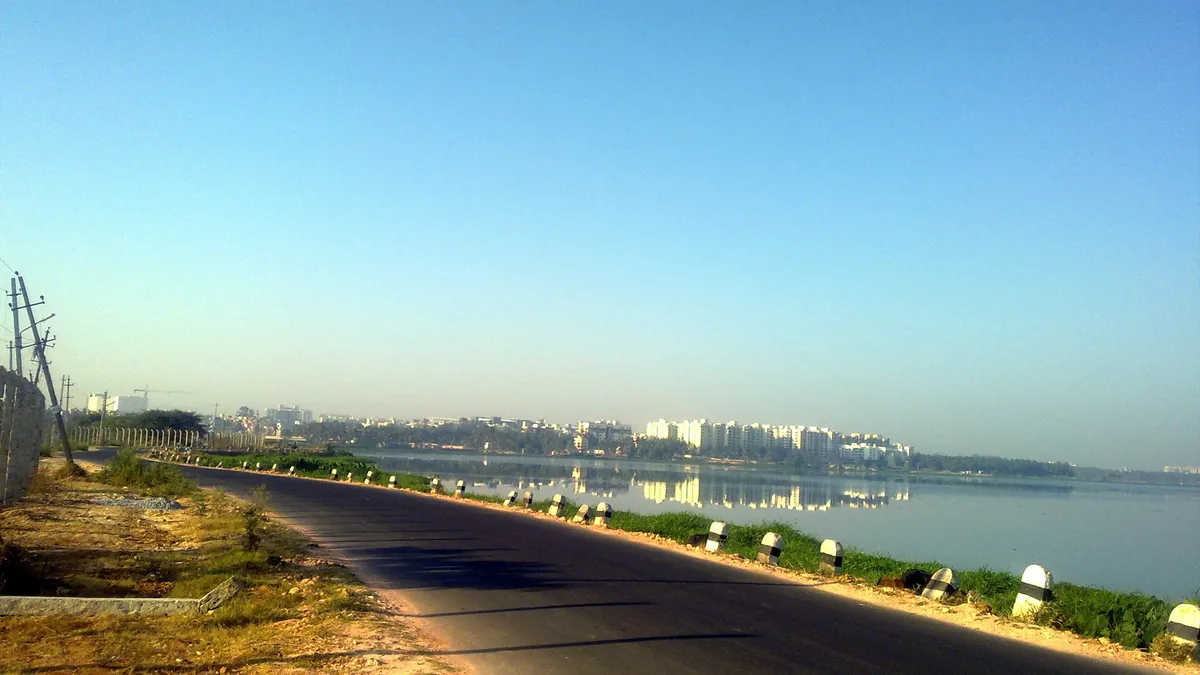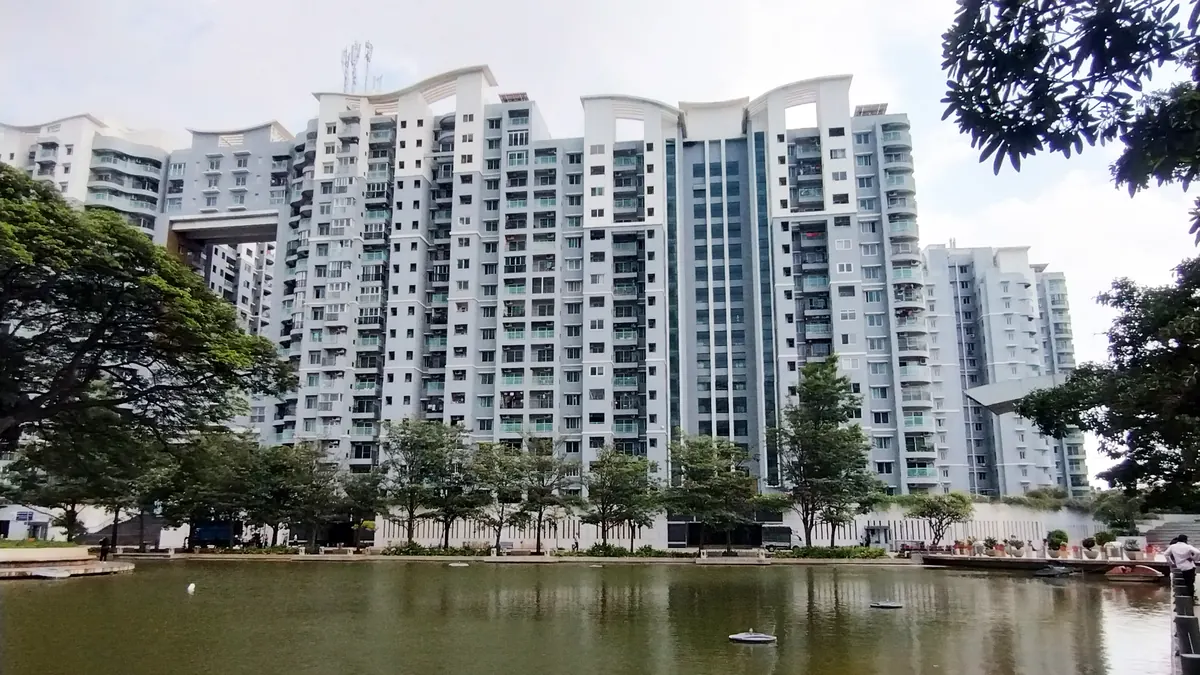
Photo: Ashwin Kumar, Wikimedia Commons.
The Greater Bengaluru Authority (GBA) has actively identified 37,216 property tax revision cases across Bengaluru's five newly structured city corporations, revising 13,253 properties in the current financial year through August-end as reported by The Hindu. This municipal initiative is an algorithmic reassessment and enforcement drive targeting undeclared built-up area and usage discrepancies detected via drone imagery and GIS mapping—it is not a notified citywide tax rate hike. Property owners can audit their exposure by querying their 10-digit PID on the municipal tax portal. If a reassessment notice appears, property owners must not click the download link carelessly; the portal treats downloading as constructive acceptance of revised tax parameters.
The judicial protections mandated by the High Court of Karnataka regarding physical site visits and algorithmic reassessment limits are covered in our High Court drone survey analysis. A clause-by-clause walkthrough of formal demand paperwork is detailed in how to read a GBA property tax demand. This guide analyzes the statistical scale of the drive, corporation-wise risk exposure, and steps to verify your property queue status.
The numbers behind GBA's reassessment drive
According to official GBA administrative records reported by The Hindu on 27 September 2026, municipal revenue departments have dramatically accelerated computerized audits to fund the newly decentralized civic corporations:
Total Active Caseload = 23,963 (Prior Year Identified) + 13,253 (Current Year Additions) = 37,216 Cases
Corporation-wise caseload and revenue claims
The distribution of reassessment proceedings reveals intense scrutiny across the western and southern suburban corridors:
- Bengaluru West City Corporation: 12,820 cases involving ₹203.20 Crore in contested demands; ₹4.16 Crore recovered across 1,488 properties.
- Bengaluru South City Corporation: 8,773 cases involving ₹151.49 Crore in tax claims; ₹2.53 Crore recovered across 1,127 properties.
- Bengaluru North City Corporation: 6,913 cases involving ₹67.03 Crore; ₹1.47 Crore recovered across 1,152 properties.
- Bengaluru Central City Corporation: 5,533 cases involving ₹82.75 Crore; ₹2.93 Crore recovered across 640 properties.
- Bengaluru East City Corporation: 3,177 cases involving ₹49.94 Crore; ₹1.23 Crore recovered across 553 properties.
If you are unsure which civic body exercises revenue jurisdiction over your neighborhood, verify your boundary using our GBA ward and corporation lookup.
Recovery gap: Why a notice is not a final debt
Across the 23,963 properties originally identified, municipal authorities projected ₹190.92 Crore in tax collections. However, only ₹12.32 Crore (6.45%) has been realized from 4,960 properties. This substantial discrepancy highlights that thousands of demands remain actively contested, stayed by judicial intervention, or paused pending mandatory physical verification.
In parallel with revision proceedings, civic corporations added 18,095 previously unassessed properties to the tax net, yielding ₹31.63 Crore in baseline revenue, with East Corporation leading with 7,004 newly enrolled properties.
Why automated drone audits trigger false liabilities
The current revision drive relies heavily on automated aerial drone orthophotos cross-referenced with GIS parcel layers. While municipal commissioners state that GPS field verification filters algorithmic errors, hundreds of apartment owners have received inflated notices due to systematic automated flaws:
- Balcony and Terrace Overhangs: Drones calculate continuous structural roof perimeters as taxable carpet/built-up area, wrongly taxing open utility balconies and unbuilt terrace slabs.
- Double-Counting Undivided Share (UDS): Computerized algorithms frequently add apportioned common areas, staircase cores, and clubhouse footprints directly onto individual residential apartment square footage.
- Automated Commercial Categorization: Ground-floor residential units or home professionals (e.g., consultants, software engineers) are frequently flagged by algorithms as commercial enterprises, triggering punitive commercial Unit Area Value (UAV) tax rates.
In June and October 2026 rulings, the High Court of Karnataka firmly held that municipal authorities cannot issue final reassessment orders based purely on drone data without providing physical on-site measurements and a meaningful right to be heard.
4-step protocol to check your property queue status
1. Query the municipal tax portal (Without downloading notices)
Navigate to bbmptax.karnataka.gov.in and input your 10-digit Property Identification (PID) or previous Self-Assessment Scheme (SAS) application number.
* Review the payment history ledger for abnormal "Pending Reassessment" or "Arrears under Scrutiny" flags.
* If a demand notice appears, do not click download immediately. The portal warns that acceptance of property tax revision is confirmed upon downloading the Demand Notice. Capture a screenshot of the summary table instead.
2. Monitor physical registered mail and email communications
Show-cause notices issued under Section 144 of the BBMP Act, 2020 are served via registered post or dispatched to the email registered during property registration. Note the exact service date; you have a statutory window (typically 15 to 30 days) to submit objections.
3. Check with the Resident Welfare Association (RWA)
Tax revision drives rarely target a single flat in isolation. In apartment communities, automated revisions typically hit entire stacks of identical configurations. Contact your association management committee to see if other owners on your line have received similar ARO demands.
4. Require seller disclosures in ongoing property deals
If you are purchasing a resale apartment, do not rely on a standard SAS receipt from the previous year. Demand an updated tax clearance statement, verify that no reassessment proceedings are pending against the PID, and include a comprehensive seller tax indemnity clause in your sale deed.
Step-by-step interactive checklist: GBA tax revision audit
Frequently asked questions
No. The 37,216 figure represents specific revision proceedings where municipal computer systems identified discrepancies between owner self-assessment filings and physical dimensions estimated by drone surveys or GIS data. It does not reflect a general, citywide tax hike.
Bengaluru West Corporation encompasses large, densely developed residential and commercial zones with extensive legacy properties, mixed-use plots, and historical layouts where drone surveys detected significant divergence from historical manual records.
The official portal states that downloading the demand notice confirms acceptance of the revised property tax calculation. If you disagree with the reassessment, downloading without filing objections creates an administrative record of acceptance that complicates subsequent appellate appeals before the revenue authorities.
Under Section 148 of the BBMP Act, 2020, property tax is a primary charge upon immovable property. However, before coercive attachment or distress warrants can be executed, authorities must satisfy statutory requirements: serving a valid show-cause notice, providing an opportunity for personal hearing, and conducting physical inspections where area calculations are contested.
Buyers must require the seller to furnish original SAS payment receipts for the preceding three years, verify the PID status on bbmptax.karnataka.gov.in, cross-check deed measurements against the tax register, and execute an explicit indemnity clause holding the vendor liable for retrospective municipal tax revisions.
Yes. Property owners can remit the regular base property tax under the self-assessment scheme while submitting a formal written petition to the Assistant Revenue Officer contesting the revised differential. In urgent transactions, payments can be made under protest accompanied by a formal covering letter reserving all legal remedies.
For comprehensive resources on property tax management and local diligence, consult: - A Drone or GIS Image Is Not a Final Tax Bill: Karnataka High Court Framework - How to Read a GBA Property Tax Demand Notice - Which Ward and City Corporation Is My Flat In? Pin Code Lookup - Post-Purchase Property Diligence: First 90 Days
Legal Notice: This article provides journalistic and legal commentary on municipal administration and published judicial rulings. It does not constitute formal legal counsel. Property tax disputes, writ proceedings, and municipal appeals require individualized advice from a practicing property advocate.
Accounting Notice: Property tax payments, commercial reassessments, and penalty interest carry tax deduction implications under Section 22(1) of the Income-tax Act, 2025. Consult a Chartered Accountant regarding proper capitalization and tax adjustments.
Sources
- The Hindu: Property Tax Revision Cases Rise to 37,216 in Bengaluru (Published 27 Sept 2026, Updated 29 Sept 2026)
- Bruhat Bengaluru Mahanagara Palike (BBMP) Tax Portal: Official Property Tax System
- High Court of Karnataka: Writ Rulings on Physical Site Inspection Mandates, WP 14522/2026 & Connected Matters
- The Greater Bengaluru Governance Act, 2024: Civic Restructuring & Revenue Governance Provisions