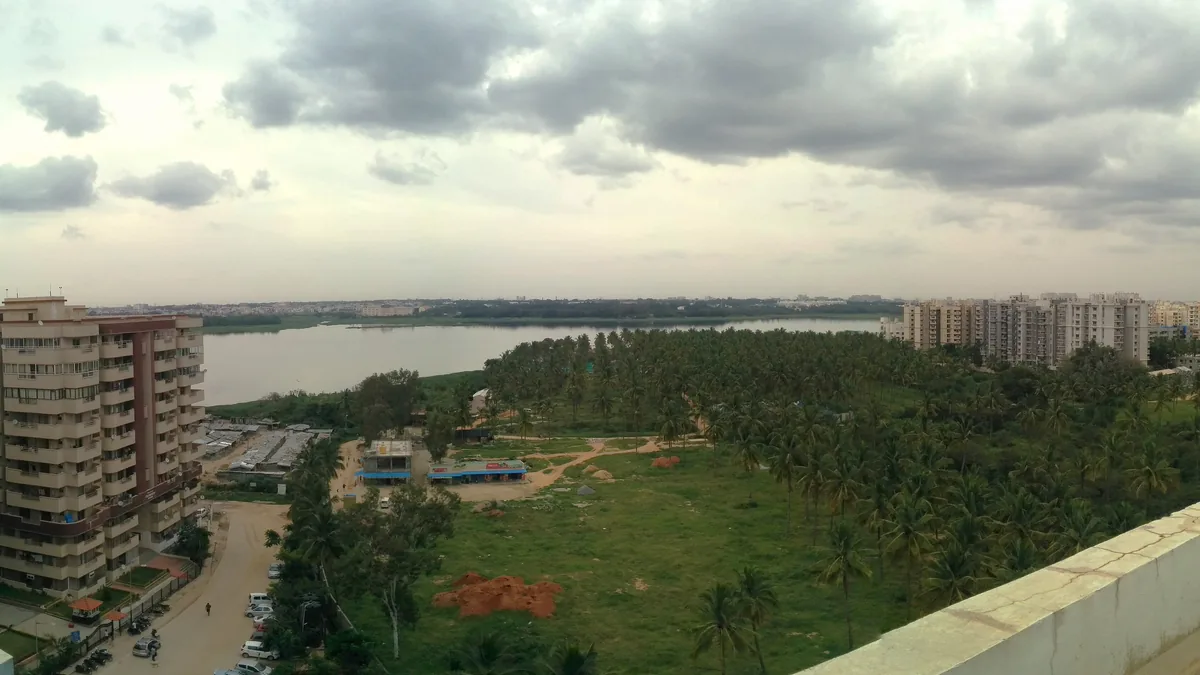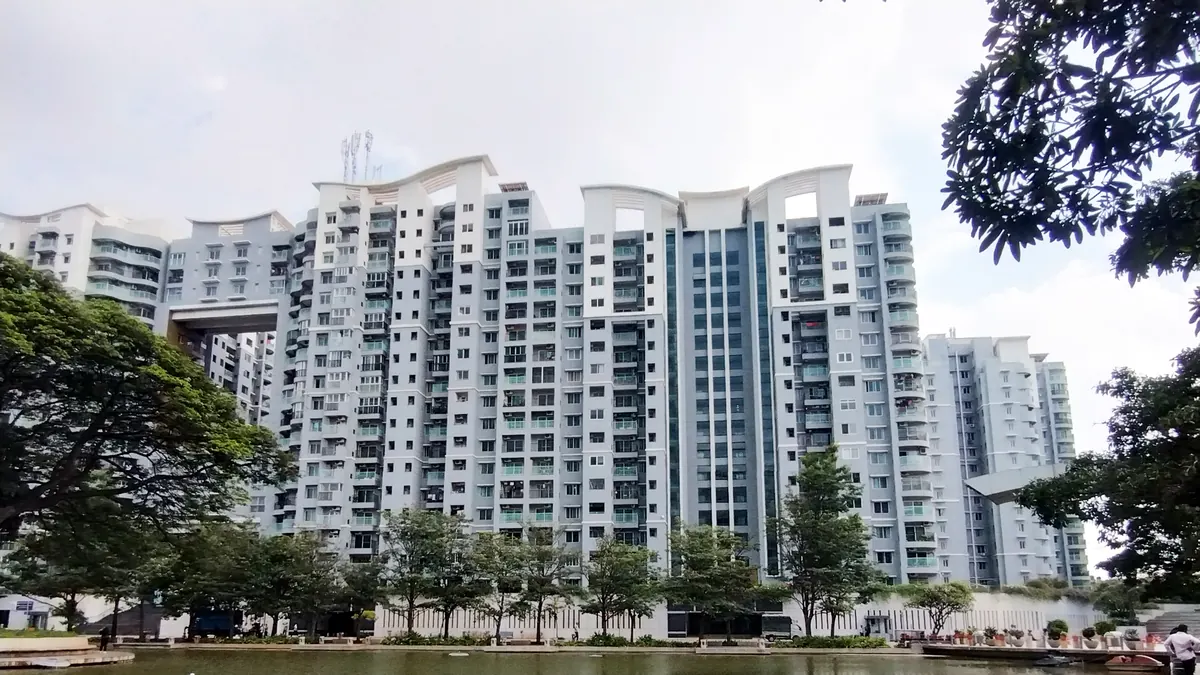
Photo: Sandip Bhattacharya, Wikimedia Commons.
Property tax across the Greater Bengaluru Authority (GBA) jurisdiction operates under the Self-Assessment Scheme (SAS) utilizing the Unit Area Value (UAV) method. Tax liability derives from five parameters: property category (RCC vs other structures), municipal zone (Zone A through F based on guidance values), building age (depreciation), occupancy type (self-occupied vs tenanted), and declared plinth/car parking areas. Before executing a resale purchase, buyers must use the Property Identification Number (PID) on the GBA tax portal to audit at least 3 to 5 years of historical payment records. A single current-year payment receipt does not indemnify buyers against hidden multi-year arrears or automated reassessment demand notices.
Acquiring a home in Bengaluru involves verifying not only title deeds but also statutory municipal tax standing.
Under the Greater Bengaluru Governance Act and Bruhat Bengaluru Mahanagara Palike (BBMP) Act, 2020, property tax attaches directly to the real estate asset rather than the individual owner. If a previous seller under-declared built-up area or neglected tax payments for three years, municipal recovery notices, statutory 2% per month interest penalties, and e-Khata blocking transfer directly to the unsuspecting purchaser.
Understanding how GBA calculates property tax and systematically verifying arrears using the official portal protects buyers from inheriting unexpected municipal liabilities.
The Unit Area Value (UAV) calculation architecture
Property tax in Bengaluru is computed using a standardized municipal formula based on per-square-foot baseline values across zones:
+--------------------------------------------------------------------------------+
|                 GBA PROPERTY TAX COMPUTATION WORKFLOW                          |
+--------------------------------------------------------------------------------+
|  [STEP 1: GROSS UNIT AREA VALUE (TAV)]                                         |
|  TAV = Total Built-up Area (sq ft) x Notified Monthly Unit Value (Rs/sq ft) x 10|
|  + Car Parking Area (sq ft) x Notified Car Park Rate x 10                      |
|                                                                                |
|  [STEP 2: NET UNIT VALUE (D)]                                                  |
|  Depreciation Deduction (based on building age: 3% to 30% max ceiling)         |
|  Net Value (NAV) = TAV - Depreciation                                          |
|                                                                                |
|  [STEP 3: BASE PROPERTY TAX]                                                   |
|  Base Tax = 20% of NAV (Residential) OR 25% to 30% of NAV (Commercial)         |
|  *Note: Tenanted residential units pay double the unit rate of self-occupied   |
|                                                                                |
|  [STEP 4: STATUTORY MUNICIPAL CESS]                                            |
|  Health Cess (15%), Library Cess (6%), Beggary Cess (3%) added to Base Tax     |
|                                                                                |
|  [STEP 5: REBATE / PENALTY]                                                    |
|  5% Early Bird Rebate (if paid in April) OR 2% monthly compounding penalty     |
+--------------------------------------------------------------------------------+
The five foundational calculation factors
- Municipal Valuation Zone (A through F): Bengaluru is partitioned into 6 tax zones based on prevailing Department of Stamps and Registration guidance values. Zone A represents the highest commercial and residential land rates (such as Indiranagar and Koramangala), scaling down to Zone F (peripheral rural fringe wards).
- Structural Construction Category: - Category I: High-grade RCC construction with vitrified, marble, or granite flooring. - Category II: Semi-pucca structures, tiled roofing, or asbestos/sheet constructions.
- Occupancy Status (Self-Occupied vs Tenanted): Tenanted residential units are assessed at double the monthly per-sq-ft unit rate compared to self-occupied premises. If a flat is let out to tenants, declaring it as self-occupied constitutes municipal tax evasion, triggering retroactive statutory penalty assessments equal to full tax liability.
- Building Age & Depreciation: The municipal council allows statutory depreciation ranging from 3% (for buildings under 3 years) up to a maximum statutory cap of 30% (for structures exceeding 20 years of age).
- Cess Additions: Karnataka municipal statutes impose statutory cesses on the base property tax: - Health Cess: 15% - Library Cess: 6% - Beggary Cess: 3% - Total statutory cess standardly adds 24% over the base tax computation.
How to check property tax arrears using your PID
Never rely on a printed paper receipt handed over at a property viewing. Follow this step-by-step digital audit before signing the Agreement to Sell:
Step 1: Obtain the 10-digit PID number
Every assessed property in Bengaluru possesses a unique 10-digit Property Identification Number (PID) comprising Ward Number, Street ID, and Plot Serial Number. The PID appears prominently on historical SAS tax receipts and the property's Final e-Khata.
Step 2: Access the GBA property tax portal
Navigate to the official municipal tax portal (bbmptax.karnataka.gov.in or the unified GBA platform).
Step 3: Check payment status and historical ledger
- Click on Tax Paid Details / Payment Status.
- Enter the 10-digit PID Number and Owner Surname.
- The portal displays the complete historical ledger across financial years.
- Verify that every year shows "Paid" with an associated receipt number and transaction reference.
+--------------------------------------------------------------------------------+
|                 RED FLAGS ON GBA TAX ARREARS AUDIT                             |
+--------------------------------------------------------------------------------+
|  [RED FLAG 1: MISSING FINANCIAL YEARS]                                         |
|  Payment ledger skips years (e.g., 2022-23 and 2024-25 paid, but 2023-24 blank)|
|  Risk: Outstanding principal plus 2% monthly compounding interest due.         |
|                                                                                |
|  [RED FLAG 2: AREA MISMATCH]                                                   |
|  Tax receipt declares 1,100 sq ft, but Sale Deed/Plan shows 1,450 sq ft.       |
|  Risk: Drone survey automated reassessment notice with penalty under Sec 144.  |
|                                                                                |
|  [RED FLAG 3: TENANTED FLAT DECLARED AS SELF-OCCUPIED]                         |
|  Owner let out property but filed Form IV (Self-Occupied) instead of Form V.   |
|  Risk: Municipal recovery order for the entire tax differential plus penalty.        |
+--------------------------------------------------------------------------------+
Form IV vs Form V: understanding the SAS forms
When filing or auditing returns under the Self-Assessment Scheme, two primary forms are utilized: - Form IV (White Form): Used when there is zero change in property status, built-up area, or occupancy mode compared to the previous assessment year. - Form V (Blue Form): Mandatory whenever alterations occur—such as adding an extra room, converting a residential unit into commercial use, or shifting between tenanted and self-occupied status.
Property tax and municipal arrears checklist
Perform these due diligence checks prior to purchasing any Bengaluru residential property.
Frequently asked questions
No. Under Karnataka Department of Stamps and Registration mandates, Kaveri 2.0 requires the latest property tax receipt and PID verification to generate registration appointments. Sub-Registrars will refuse conveyance if tax records reflect unpaid arrears.
Unpaid municipal property tax attracts a statutory interest penalty of 2% per month (simple interest) on the outstanding balance from the due date until full settlement. Persistent defaults can lead to municipal distraint warrants and attachment of rental yields.
The Greater Bengaluru Authority offers a 5% rebate on the total annual property tax payable if the homeowner settles the entire year's tax dues in a single payment during the first month of the financial year (typically throughout April).
No. Following property conveyance, the buyer must submit an application for municipal Khata transfer (mutation) on the e-Aasthi portal. Once the transfer is approved and the mutation fee paid, the tax assessment roll updates to the new purchaser's name.
If the municipal corporation has issued a demand notice for area under-declaration based on GIS or drone surveys, the seller must resolve the notice, pay the differential tax and penalty, and obtain a formal clearance certificate before the sale agreement is executed.
Legal Note: Property tax liabilities operate as a first charge on immovable property under Karnataka municipal statutes. Consult a property lawyer to conduct statutory tax searches and draft seller indemnity covenants prior to concluding secondary real estate purchases.
Administrative Note: Municipal tax rates, zonal classifications, and SAS rules are governed by notifications issued by the Urban Development Department, Government of Karnataka. Verify active schedules on the official GBA portal.
Sources
Checked 18 Nov 2026.
- Bruhat Bengaluru Mahanagara Palike Act, 2020 (Property Tax Assessment Provisions): https://dpal.karnataka.gov.in/
- Greater Bengaluru Authority Property Tax Portal (Self-Assessment System): https://bbmptax.karnataka.gov.in/
- Department of Stamps and Registration, Government of Karnataka: https://kaveri.karnataka.gov.in/