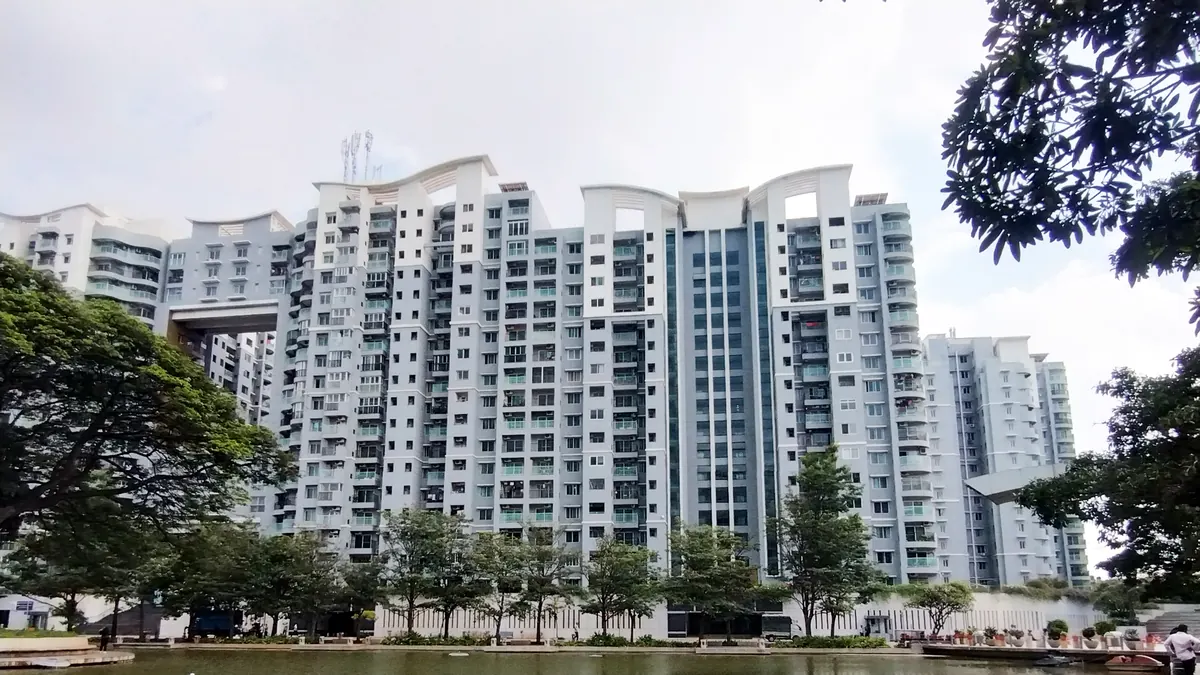
Photo: Pinakpani, Wikimedia Commons.
A Power of Attorney (POA) enables a designated agent to represent a buyer or seller who cannot physically attend registration before a Bengaluru Sub-Registrar. To avoid legal ambiguity, principals should execute a task-specific Special Power of Attorney (SPA) defining the exact property schedule and permitted acts. Instruments executed outside India require Indian Embassy or Consular attestation (or Apostille under the Hague Convention), followed by mandatory adjudication and stamp duty payment at the District Registrar office in Karnataka within 90 days of receipt. Crucially, a POA operates purely as an agency authorization; per Supreme Court rulings, it does not transfer immovable property title without a registered Sale Deed.
Whether due to overseas employment (NRI status), mobility limitations, or emergency travel, property buyers and sellers frequently cannot appear in person before the Sub-Registrar of Assurances in Bengaluru.
Under the Powers of Attorney Act, 1882 and the Registration Act, 1908, a principal can lawfully appoint an attorney-in-fact to represent them, sign conveyance deeds, submit biometric data, and present original title documents.
However, executing an improper POA—such as relying on generic templates, missing consular stamps, or skipping Karnataka stamp adjudication—causes immediate rejection on the Kaveri 2.0 portal on registration day.
Special POA (SPA) vs General POA (GPA)
For residential and commercial real estate transactions in Karnataka, selecting the correct instrument type is paramount:
+--------------------------------------------------------------------------------+
|                 SPECIAL POA VS GENERAL POA FOR CONVEYANCE                      |
+--------------------------------------------------------------------------------+
|  [SPECIAL POWER OF ATTORNEY (SPA) - RECOMMENDED]                              |
|  Scope: Limited strictly to ONE specific property & ONE explicit transaction   |
|  Authority: Authorizes signing the Sale Deed & Kaveri 2.0 biometric completion |
|  Risk Profile: Low; self-terminates automatically upon registration completion |
|                                                                                |
|  [GENERAL POWER OF ATTORNEY (GPA) - HIGH RISK]                                 |
|  Scope: Broad, sweeping authority over multiple properties and asset classes   |
|  Authority: Can buy, sell, mortgage, lease, and represent before all forums   |
|  Risk Profile: Severe; exposes principal to unauthorized alienation or debt    |
+--------------------------------------------------------------------------------+
Comparison of execution pathways
| Execution Scenario | Jurisdiction of Signing | Mandatory Attestation / Certification | Karnataka Adjudication Required? |
|---|---|---|---|
| Executed in Karnataka | Sub-Registrar Office | Registered under Article 41(e) or notarized | No (stamped directly in Karnataka) |
| Executed in Another Indian State | Local Sub-Registrar / Notary | Registered in home state with adequate stamp duty | Yes, if stamp duty differential exists |
| Executed Abroad (NRI / OCI) | Indian Embassy / Consulate | Consular Seal or Apostille under Hague Convention | Yes, mandatory within 90 days at District Registrar |
| Foreign National Principal | Hague Convention Member Country | Notarized + Hague Apostille Certificate | Yes, mandatory within 90 days at District Registrar |
Overseas POA execution roadmap for NRIs
For non-resident Indians and overseas buyers, the execution sequence follows a strict statutory timeline under Section 18 of the Karnataka Stamp Act, 1957:
+--------------------------------------------------------------------------------+
|                 NRI OVERSEAS POWER OF ATTORNEY LIFECYCLE                       |
+--------------------------------------------------------------------------------+
|  [STEP 1: DRAFTING]                                                           |
|  Bengaluru advocate drafts property-specific Special POA with clear boundaries|
|                                                                                |
|  [STEP 2: OVERSEAS ATTESTATION]                                               |
|  Principal signs before Indian Consular Officer OR Public Notary with Apostille|
|                                                                                |
|  [STEP 3: POSTAL DISPATCH]                                                    |
|  Original attested instrument couriered to attorney in Bengaluru               |
|                                                                                |
|  [STEP 4: DISTRICT REGISTRAR ADJUDICATION]                                    |
|  Attorney presents POA within 90 days of arrival; pays Karnataka stamp duty    |
|                                                                                |
|  [STEP 5: KAVERI 2.0 INTEGRATION]                                             |
|  Adjudicated POA uploaded to Kaveri 2.0; attorney executes registered Sale Deed|
+--------------------------------------------------------------------------------+
1. Document drafting and boundaries
Drafting must be tailored to the specific flat or site. The instrument must recite: - Complete personal particulars of the principal and attorney (PAN, Aadhaar/Passport numbers). - Exact Schedule of Property (Survey Number, Unit Number, BBMP/GBA Ward, Khata Number, Super Built-up Area, and Undivided Share of Land). - Explicit instructions regarding consideration: State explicitly whether the attorney is authorized to receive funds or whether payments must be made directly to the principal's bank account.
2. Attestation overseas
The principal must sign the POA in the presence of an authorized officer: - Consular Path: Book an appointment at the nearest Indian Embassy or Consulate. The consular officer verifies identity, stamps the pages, and attaches the official seal. - Apostille Path: In countries signatory to the Hague Apostille Convention (such as the US, UK, Canada, Australia), the principal can execute the document before a local notary public and obtain an Apostille certificate from the designated state/federal authority.
3. Mandatory 90-day adjudication in Karnataka
Under Section 18 of the Karnataka Stamp Act, an instrument executed outside India must be stamped within three months (90 days) from the date it is first received in the state of Karnataka.
The attorney-in-fact must: 1. Carry the original attested POA alongside courier air waybills proving the date of physical receipt in India. 2. Present the dossier to the jurisdictional District Registrar (e.g., Shivajinagar, Jayanagar, Gandhinagar). 3. Pay the prescribed Karnataka stamp duty under Article 41 of the Stamp Act via Kaveri 2.0 e-payment. 4. Obtain the District Registrar's endorsement and seal certifying full stamping.
If the 90-day window is breached, the instrument cannot be registered without paying heavy compounding penalties (up to ten times the deficit duty).
Critical statutory safeguards
- The Rule in Suraj Lamp: In Suraj Lamp & Industries v. State of Haryana, the Supreme Court established that a Power of Attorney is not an instrument of transfer. It does not confer ownership title. Title transfers solely upon the execution and registration of a conveyance deed under Section 17 of the Registration Act.
- Revocation and Survivorship: A power of attorney automatically terminates upon the death, mental incapacity, or bankruptcy of the principal. Any sale deed executed after the principal's demise is void ab initio.
- Separate POAs for Co-Owners: If a property is owned jointly (e.g., husband and wife), each co-owner must execute an individual POA or jointly execute a shared instrument. One spouse cannot authorize transactions over the other's undivided share without explicit authorization.
Power of attorney verification checklist
Mandatory compliance items before presenting a POA at the Sub-Registrar Office.
Frequently asked questions
No. The Supreme Court of India has firmly ruled that a Power of Attorney is purely an agency instrument and does not create any title, right, or interest in immovable property. A lawful conveyance requires a registered Sale Deed executed on appropriate stamp duty.
A Power of Attorney is automatically revoked upon the demise of the principal under Section 201 of the Indian Contract Act. If a sale deed is executed after the principal's death, the transaction is legally void, and title passes to the principal's legal heirs.
Yes, for property conveyance. Under Section 17 of the Registration Act, as applicable in Karnataka, an instrument empowering an agent to present documents or execute sales of immovable property must be registered or formally adjudicated by the District Registrar.
No. An agent stands in a fiduciary relationship with the principal. Under Indian trust and agency jurisprudence, an attorney cannot convey property to themselves or derive personal profit without the principal's informed written consent.
A Power of Attorney remains valid until it is formally revoked by the principal, until the specific transaction outlined in an SPA is completed, or until the demise of either party. However, for registrations occurring more than a few months after execution, Sub-Registrars frequently demand a fresh Life Certificate.
Legal Note: Power of attorney drafting, consular attestations, and Section 18 stamp adjudications are strictly regulated by the Registration Act, 1908 and Karnataka Stamp Act, 1957. Consult a qualified property lawyer to verify draft clauses before overseas execution.
FEMA Note: Non-resident property transactions involve specific banking channel restrictions under Reserve Bank of India foreign exchange regulations. Consult an authorized dealer bank or chartered accountant to coordinate funds flows.
Sources
Checked 18 Nov 2026.
- Powers of Attorney Act, 1882 (Act No. 7 of 1882): https://www.indiacode.nic.in/handle/123456789/2311
- Karnataka Stamp Act, 1957 (Section 18 - Instruments executed out of India): https://dpal.karnataka.gov.in/
- Supreme Court of India, Landmark Ruling on Property Transfers via POA (Suraj Lamp & Industries v. State of Haryana): https://main.sci.gov.in/