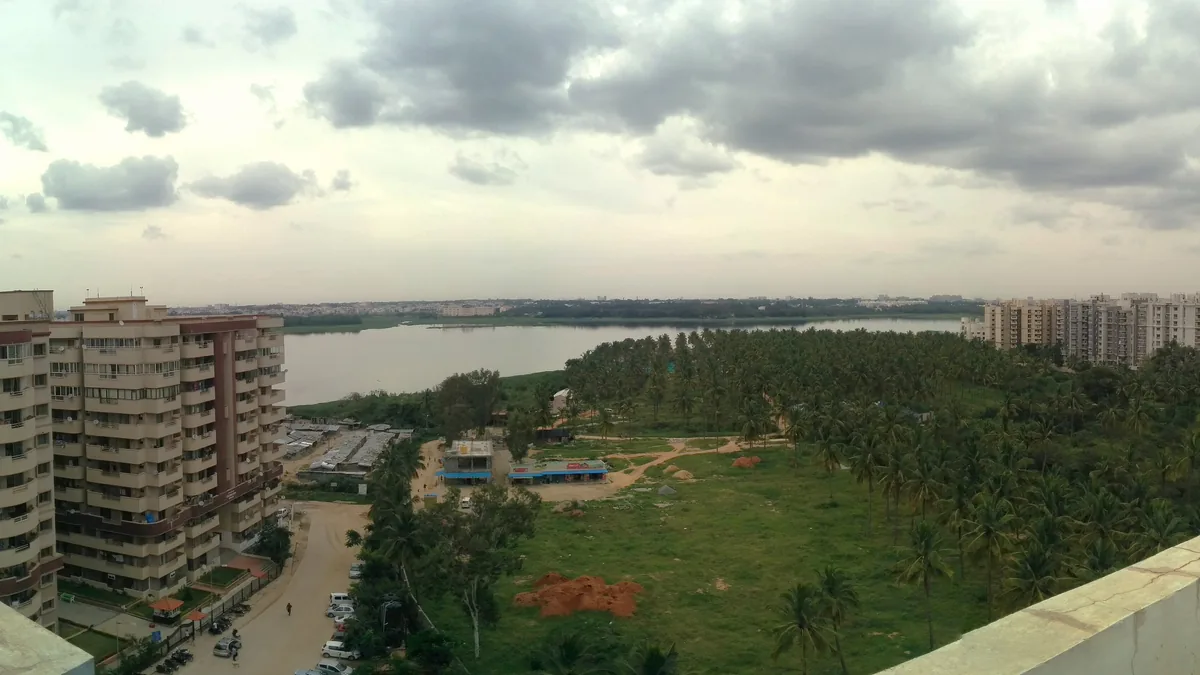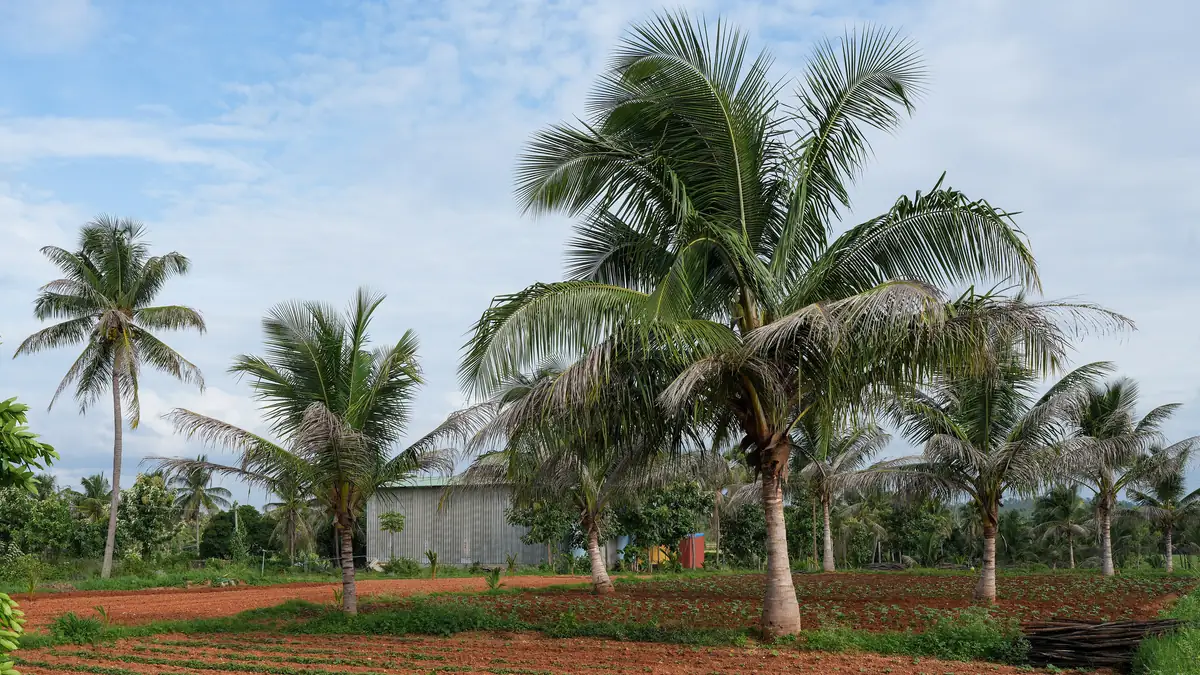
Photo: Deepak TL, Wikimedia Commons, CC BY-SA 4.0.
Following the Karnataka Land Reforms (Amendment) Act, 2020 (Act 56 of 2020), the historic statutory bars restricting agricultural land purchases exclusively to agriculturists (legacy Sections 79A, 79B, and 79C) were permanently repealed. Any Indian citizen or registered entity can now lawfully purchase agricultural land in Karnataka regardless of income. However, critical statutory constraints remain: Section 63 land ceiling limits (max 20 to 40 standard units), Section 80 restrictions on A-Class irrigated lands, PTCL granted land protections, and Foreign Exchange Management Act (FEMA) prohibitions that strictly bar Non-Resident Indians (NRIs) and OCIs from acquiring agricultural land or farmhouses.
For over four decades, acquiring farmland in Karnataka was among the most legally restricted transactions in India.
Under the historic provisions of Sections 79A and 79B of the Karnataka Land Reforms Act, 1961, only verified hereditary agriculturists with non-agricultural incomes under Rs 25 Lakhs could acquire agricultural acreage. Urban professionals who purchased land through intermediaries routinely faced government forfeiture inquiries under Section 83.
While the landmark 2020 Land Reforms Amendments eliminated the "agriculturist-only" criteria, many urban homebuyers mistakenly assume that agricultural land can now be treated like residential layout plots.
Purchasing agricultural land around Bengaluru without understanding statutory ceilings, soil classifications, FEMA bars, and Section 95 conversion procedures leads to severe legal and financial pitfalls.
What the 2020 Land Reforms Amendment actually changed
+--------------------------------------------------------------------------------+
|                 KARNATAKA LAND REFORMS: BEFORE VS AFTER 2020                   |
+--------------------------------------------------------------------------------+
|  [PRE-2020 REGIME: HEAVY PROHIBITIONS]                                         |
|  - Section 79A: Non-agricultural income cap (Max Rs 25 Lakhs/year)             |
|  - Section 79B: Only hereditary cultivating agriculturists could own land      |
|  - Section 79C: Mandatory reporting & state forfeiture under Section 83        |
|                                                                                |
|  [POST-2020 REFORM (ACT 56 OF 2020)]                                           |
|  - Sections 79A, 79B, and 79C completely REPEALED and OMITTED                  |
|  - Any resident Indian citizen can buy agricultural land                       |
|  - Ceiling limits revised upward under Section 63 (20 Units per family)         |
|  - All pending Section 79A/B inquiry cases were legally abated                 |
+--------------------------------------------------------------------------------+
The five critical legal traps that still apply
While the income ceiling and agriculturist status test were abolished, the amendment did not create an unregulated free-for-all. Buyers must navigate five mandatory legal barriers:
1. Section 63: Statutory land ceiling limits
The amended Section 63 establishes strict upper limits on total agricultural land ownership: - Individual / Standard Family: Maximum of 20 units of land for a person who is not a member of a family or for a family of up to five members. - Large Families: Additional 4 units for each member exceeding five, subject to an absolute ceiling of 40 units. - What is a "Unit"?: A statutory unit under the Act is not a flat acre. It is defined in the First Schedule based on soil productivity: - 1 Unit of Class A irrigated land (with assured canal/dam water) = 1.25 Acres. - 1 Unit of Class D rainfed dry land = 5.4 Acres.
Consequently, an individual cannot acquire unlimited acreage; your cumulative agricultural holdings across Karnataka must remain below statutory unit caps.
2. Section 80: Restrictions on A-Class irrigated land
The recast Section 80 imposes explicit restrictions: - A transfer of Class A irrigated land (land with assured government irrigation capable of growing two paddy/sugarcane crops a year) is unlawful if the purchaser does not utilize it strictly for agricultural purposes. - Converting high-grade Class A canal-irrigated farmland into residential farmhouses or recreational resorts remains strictly prohibited under town planning laws.
3. FEMA prohibition on NRIs and OCIs
This is the most widespread compliance violation in Bengaluru real estate: - Under Reserve Bank of India (RBI) regulations and the Foreign Exchange Management Act (FEMA) (Non-debt Instruments Rules, 2019), Non-Resident Indians (NRIs) and Overseas Citizens of India (OCIs) are strictly barred from purchasing agricultural land, plantation property, or farmhouses in India. - The 2020 Karnataka state amendment applies only to state land reforms; it cannot override federal foreign exchange legislation. - An NRI who purchases agricultural land in Karnataka (even through local GPA holders) commits a direct FEMA violation, exposing the transaction to immediate total asset confiscation and financial penalties up to three times the sum involved.
4. Section 80-A: PTCL granted land bar
Section 80-A explicitly mandates that the relaxation of land reforms shall not dilute protections under the Karnataka Scheduled Castes and Scheduled Tribes (PTCL) Act, 1978. Agricultural land originally granted to SC/ST allottees cannot be sold without prior written permission from the Deputy Commissioner under Section 4(2).
5. You cannot build a home without Section 95 conversion
Buying agricultural land does not authorize you to pour concrete foundations, construct a villa, or install residential utility meters. - Under Section 95 of the Karnataka Land Revenue Act, 1964, agricultural land must be formally converted to non-agricultural residential use by the Deputy Commissioner. - Constructing residential buildings on unconverted agricultural land constitutes unauthorized development, exposing structures to demolition by planning authorities (BMRDA, BDA, or local town planning boards).
The "Managed Farmland" marketing illusion
+--------------------------------------------------------------------------------+
|                 MANAGED FARMLAND: MARKETING VS STATUTORY REALITY               |
+--------------------------------------------------------------------------------+
|  [WHAT DEVELOPER BROCHURES PROMISE]                                            |
|  "1/4 Acre Managed Farm Plot with Exclusive Clubhouse, Concrete Roads, & Villa"   |
|                                                                                |
|  [WHAT REVENUE LAW ACTUALLY DICTATES]                                          |
|  - Land remains designated agricultural in Bhoomi RTC Column 7                 |
|  - Sub-dividing agricultural land below statutory fragmentation limits is void|
|  - Constructing permanent residential villas without DC conversion is illegal  |
|  - Buyers receive an undivided share (UDS) of a farm, not a plotted site title |
+--------------------------------------------------------------------------------+
Agricultural land due diligence checklist
Mandatory statutory checks prior to purchasing agricultural acreage or farm plots in Karnataka.
Frequently asked questions
No. Under FEMA Non-debt Instruments Rules, Non-Resident Indians (NRIs) and Overseas Citizens of India (OCIs) are strictly prohibited from purchasing agricultural land, farmhouses, or plantation properties anywhere in India. They may only acquire residential or commercial real estate, or inherit agricultural land.
Yes. Following the omission of Sections 79A and 79B in 2020, any Indian citizen or domestic company can acquire agricultural land, provided their aggregate land holdings do not breach Section 63 ceiling limits and the land is not Class A canal-irrigated or PTCL granted land.
Under the Karnataka Land Revenue Act, a farmer may construct a small farm building (Krishi Mane) purely incidental to agricultural operations (storing equipment, housing pumps). However, constructing a modern residential bungalow, swimming pool, or layout villas requires formal non-agricultural land conversion under Section 95.
Under Section 63, an individual without a family or a standard family of up to five members can own a maximum of 20 units (which translates to approximately 25 acres of Class A land or up to 108 acres of dry Class D land).
Before executing conveyance, the buyer and seller must submit statutory declarations under Form 7 regarding their aggregate land holdings. A property lawyer verifies these declarations against Bhoomi land database entries.
Legal Note: Agricultural land acquisitions are governed by the Karnataka Land Reforms Act, 1961, the Karnataka Land Revenue Act, 1964, and FEMA regulations. Consult an experienced revenue property advocate before executing financial commitments.
Disclaimer: This article is published for educational guidance and regulatory compliance analysis. It does not constitute formal legal counsel.
Sources
Checked 18 Nov 2026.
- Karnataka Land Reforms Act, 1961 (as amended by Karnataka Act 56 of 2020): https://dpal.karnataka.gov.in/
- Foreign Exchange Management (Non-debt Instruments) Rules, 2019 (Rule 24 - Restrictions on Agricultural Property): https://www.rbi.org.in/
- Karnataka Bhoomi Portal (Revenue Land Management System): https://landrecords.karnataka.gov.in/