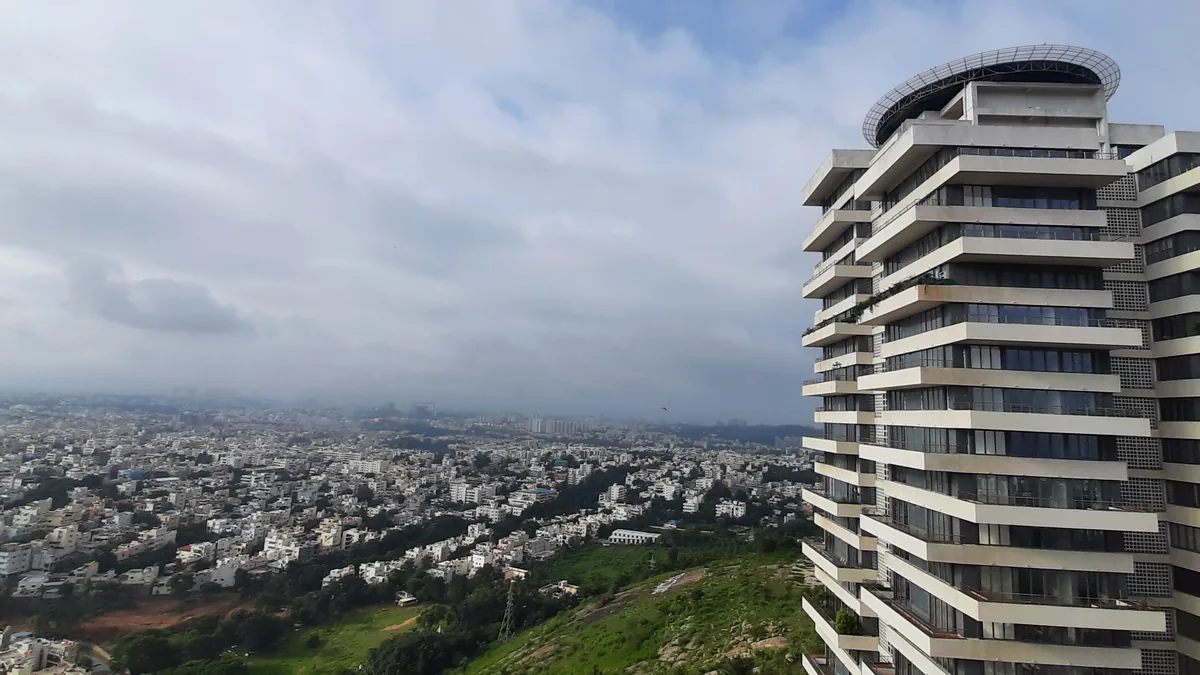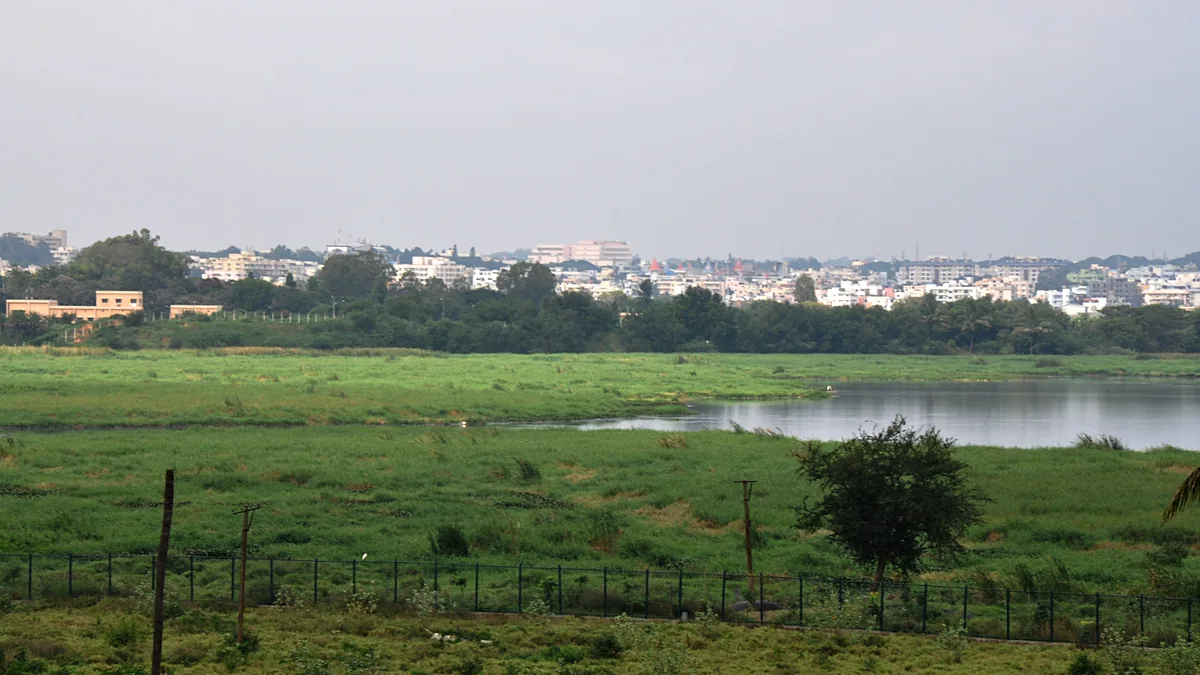
Photo: Wyrnilla, Wikimedia Commons.
On Bengaluru plots and incomplete structures, municipal property tax is assessed under separate Vacant Land or Excess Vacant Land statutory groups rather than standard built-up rates. Arrears carry compounding monthly statutory interest and mandatory solid waste/transport cesses.
Disclosure: acre&key's advice is free to buyers. We're an authorised sales partner for some projects and may be paid by the developer.
When purchasing an open residential plot, an older villa with an expansive compound, or an under-construction project in Bengaluru, buyers frequently assume that property tax due diligence begins and ends with verifying the seller's latest annual tax receipt.
However, under the Karnataka Municipal Corporations (KMC) Act 1976 and the Bruhat Bengaluru Mahanagara Palike (BBMP) / Greater Bengaluru Authority (GBA) Self-Assessment Scheme (SAS), unpaid property tax is a statutory charge on the immovable property itself. If an outgoing owner misclassified land use, under-reported plot square footage, or ignored vacant land tax for a decade, municipal revenue authorities will enforce recovery proceedings—including freezing digital e-Khata records or seizing assets—against the new purchaser.
The Anatomy of a Vacant Plot Tax Bill
Unlike an apartment where property tax is calculated strictly on super built-up carpet area, a plot tax assessment is broken down into multiple statutory components:
                  ┌────────────────────────────────────────────────────────┐
                  │          GBA VACANT PLOT PROPERTY TAX COMPONENTS       │
                  └────────────────────────────────────────────────────────┘
                                              │
         ┌────────────────────────────────────┼────────────────────────────────────┐
         ▼                                    ▼                                    ▼
┌──────────────────────────────┐ ┌──────────────────────────────┐ ┌──────────────────────────────┐
│       BASE VACANT TAX        │ │       STATUTORY CESSES       │ │     ARREARS & PENALTIES      │
├──────────────────────────────┤ ├──────────────────────────────┤ ├──────────────────────────────┤
│ • Unit Area Value (UAV) per  │ │ • Beggary Cess (3%)          │ │ • 2% monthly simple/compound │
│   sq ft based on zonal slab  │ │ • Library Cess (6%)          │ │   interest under Section 108A│
│ • Slabs A through F across   │ │ • Solid Waste Mgmt (SWM) Cess│ │ • Full statutory penalty for │
│   central to peripheral zones│ │ • Infrastructure/Transport   │ │   deliberate evasion       │
│ ➔ Category VIII SAS return   │ ➔ Total cesses: ~24% to 34%    │ ➔ Accumulates across decades   │
└──────────────────────────────┘ └──────────────────────────────┘ └──────────────────────────────┘
4 Critical Tax Extras That Catch Plot Buyers Off-Guard
When inspecting the property tax record for an open site or redevelopment parcel, pay close attention to these four hidden liabilities:
| Tax Extra Component | Statutory Mechanism & Formula | Why It Catches Buyers | Due Diligence Safeguard |
|---|---|---|---|
| 1. Vacant Land (Category VIII) | Assessed per square foot of total site area based on municipal zonal guidance values (Zones A to F). | Sellers often fail to file returns while waiting years for plot capital appreciation. | Demand continuous year-on-year SAS receipts for minimum 10 prior assessment years. |
| 2. Excess Vacant Land | Land surrounding a structure that exceeds the statutory building footprint ratio (FAR allowance). | An old house with a large lawn may be assessed for both built residential and excess open land. | Cross-reference sanctioned building plan footprint against physical site plot dimensions. |
| 3. Compounding Arrears Interest | Section 108A of KMC Act levies 2% per month penalty interest on defaulted tax balances. | Over a 5-year default, accumulated interest and penalties frequently exceed the principal tax due. | Run a comprehensive PID ledger audit on the live BBMP tax portal (bbmptax.karnataka.gov.in). |
| 4. Incomplete Structure Mismatch | Partially built plinths or stalled framing assessed as vacant land vs. incomplete building. | Assessing as vacant land when construction commenced triggers back-tax recovery under Section 108S. | Physically verify that on-site construction status matches the municipal return classification. |
The Danger of the "Single Latest Year Receipt"
A classic trap in Bengaluru plot transactions occurs when a seller presents a clean, stamped property tax receipt for the immediate past financial year (e.g., 2025–2026), claiming that the property has zero dues.
How the trap works: 1. The municipal online portal allows property owners to log in, select the current financial year, and pay that single year's assessment without automatically clearing historical arrears. 2. If the owner failed to pay property taxes between 2015 and 2024, those prior 9 years remain recorded in the corporation's backend ledger as unpaid arrears subject to 2% monthly interest. 3. When the buyer applies for e-Khata mutation post-registration, the revenue assessor runs a full PID audit and halts the mutation until all historical arrears and penalties are settled in full.
Interactive Tax Due Diligence Checklist
Audit the property's tax ledger against this 10-point checklist before signing a sale agreement or releasing an advance deposit:
Frequently asked questions
Yes. Under Section 112 and Section 146 of the Karnataka Municipal Corporations Act 1976, property tax, cesses, and accumulated interest constitute a primary first charge on the immovable land itself. The civic authority possesses statutory powers to attach and auction the property to recover unpaid balances, regardless of ownership transfers.
Vacant land tax is computed under the Self-Assessment Scheme based on the Unit Area Value (UAV) system. The city is divided into six value zones (A through F) based on guidance value tiers. The tax is calculated per square foot of total site area, multiplied by the zonal rate, plus applicable cesses (typically totaling ~24% to 34% of base tax).
If a seller under-reported site dimensions (e.g., declaring 1,200 sq ft for a 2,400 sq ft plot to pay lower tax), municipal revenue inspectors can issue a reassessment notice under Section 108S of the KMC Act, demanding back-taxes, 2% monthly interest, and a mandatory equal-value statutory penalty on the evaded differential amount.
No. Multiple landmark rulings of the Supreme Court of India have established that property tax receipts and revenue ledger entries are intended exclusively for fiscal collection and municipal identification. Tax payments confer zero proprietary title or ownership rights. Legal title is established exclusively by valid registered conveyance deeds.
Visit the official BBMP property tax portal (bbmptax.karnataka.gov.in), click on "Property Tax Dues" or "Payment Status", enter the 10-digit Property Identification Number (PID) or SAS application number, and retrieve the full multi-year billing and payment history ledger.
For statutory clearance gates prior to making an initial payment, review our booking token checklist.
Lawyer note: This article provides regulatory and procedural information on civic tax assessments under Karnataka municipal laws. It does not constitute formal legal counsel. For complex historical tax litigations, municipal attachment notices, or disputed zonal reclassifications, engage an experienced property advocate before executing sale agreements.
CA note: Treatment of municipal tax arrears paid at acquisition, capitalization into the asset's cost base under Section 48, and personal tax deductions under Section 24(a) should be evaluated with your chartered accountant.
Sources
Checked 17 Nov 2026.
- Karnataka Municipal Corporations Act 1976 (Sections 108, 108A, 112 on property taxation, interest on arrears, and tax recovery): https://dpal.karnataka.gov.in/
- BBMP Property Tax Self-Assessment Portal: https://bbmptax.karnataka.gov.in/
- Greater Bengaluru Governance Act 2024 (Reorganization of civic administrative structures)
- Government of Karnataka Urban Development Department Notifications on Unit Area Value (UAV) Zonal Classifications