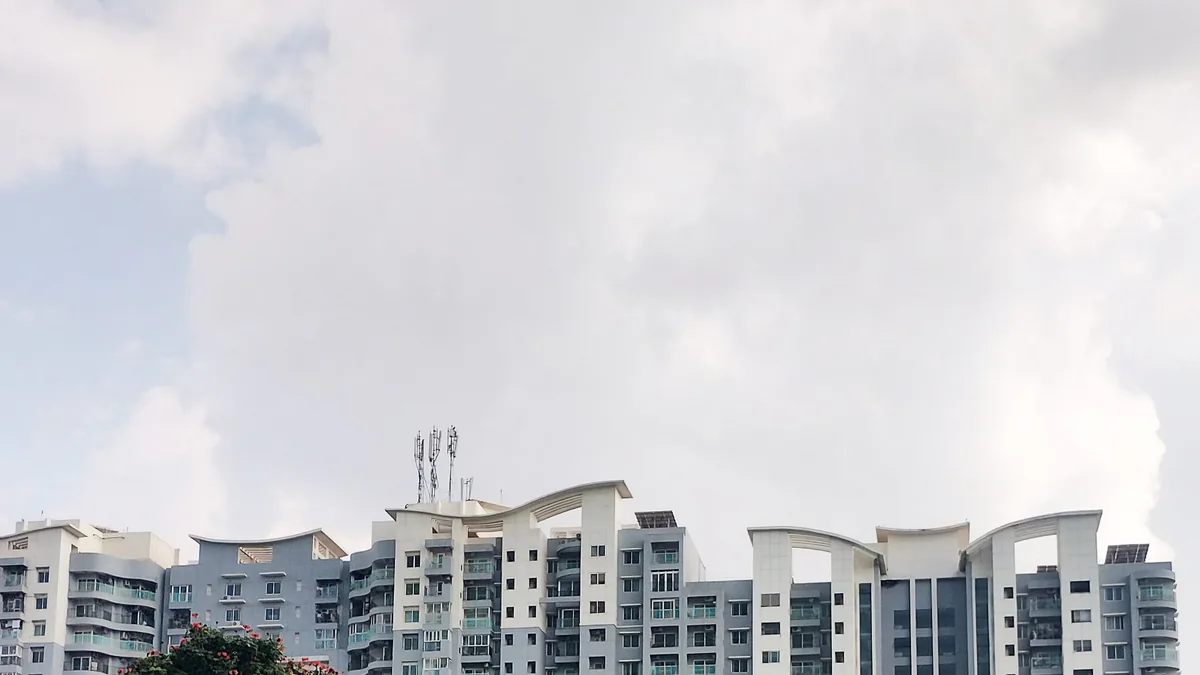
Photo: Gpkp, Wikimedia Commons, CC BY-SA 4.0.
An apartment share certificate or RWA membership certificate is conclusive evidence of your admission into the campus management body, but it does not convey title. Ownership is established exclusively by your registered sale deed and undivided share (UDS) of land.
Disclosure: acre&key's advice is free to buyers. We're an authorised sales partner for some projects and may be paid by the developer.
After completing the formal registration of a Bengaluru apartment at the Sub-Registrar's Office, new homeowners frequently overlook campus-level membership documentation. While civic mutation through the Greater Bengaluru Authority (e-Aasthi e-Khata) establishes your tax-paying record with the city, securing your official share certificate or membership transfer certificate integrates you into the resident community.
Without formal membership recognition, apartment owners face practical roadblocks: denial of voting rights at Annual General Meetings (AGMs), exclusion from management committee elections, differential amenity tariffs, and prolonged delays when attempting to sell or lease the unit in the future.
Legal Framework: Why a Share Certificate Is Not Title
It is critical to distinguish municipal title from community membership rights:
                  ┌────────────────────────────────────────────────────────┐
                  │          TITLE DEED VS. ASSOCIATION MEMBERSHIP         │
                  └────────────────────────────────────────────────────────┘
                                              │
         ┌────────────────────────────────────┴────────────────────────────────────┐
         ▼                                                                         ▼
┌─────────────────────────────────┐                             ┌─────────────────────────────────┐
│      REGISTERED SALE DEED       │                             │    MEMBERSHIP / SHARE CERT      │
├─────────────────────────────────┤                             ├─────────────────────────────────┤
│ • Conveys immovable property    │                             │ • Conveys community membership  │
│ • Undivided Share (UDS) of land │                             │ • Voting rights in society AGMs │
│ • Registered on Kaveri 2.0      │                             │ • Common amenities access       │
│ • Primary collateral for banks  │                             │ • Sinking fund accountability   │
│ ➔ Governed by TPA & Regn Act    │                             │ ➔ Governed by KSRA / KCS Act    │
└─────────────────────────────────┘                             └─────────────────────────────────┘
A share certificate certifies that a unit owner holds an equitable stake in the cooperative housing society or welfare association managing the common areas and infrastructure. Under Indian property law, your proprietary ownership of the apartment and its undivided land share is created entirely by your registered Sale Deed. A delay or dispute in issuing a share certificate cannot invalidate your title to the flat.
Governing Legislation for Bengaluru Apartment Bodies
In Karnataka, apartment associations are structured under distinct statutory frameworks:
| Entity Structure | Governing Legislation | Regulatory Authority | Share Certificate Issuance |
|---|---|---|---|
| Cooperative Housing Society | Karnataka Cooperative Societies Act 1959 (KCSA) | Registrar of Cooperative Societies | Mandatory numbered physical share certificate with designated share capital. |
| Welfare Association (RWA) | Karnataka Societies Registration Act 1960 (KSRA) | Registrar of Societies | Formal Membership Certificate / Letter of Admission; some issue decorative share certificates. |
| Deed of Declaration (KAOA) | Karnataka Apartment Ownership Act 1972 (KAOA) | Department of Stamps & Registration | Condominium association registered via registered Deed of Declaration under Form B. |
| KAOMA Act 2026 | Karnataka Apartment (Ownership & Management) Act 2026 | Competent Authority (Under Rules) | Published in October 2026; uncommenced pending formal notification of statutory rules. |
Step-by-Step Membership Transfer Process (Resale vs. Builder Handover)
Securing your membership papers follows different administrative paths depending on whether the developer or the RWA currently operates the property:
1. Direct Purchase from Developer (Primary Handover)
- Transition Phase: During early occupancy, the developer's facility management arm maintains the interim owner register.
- Document Submission: Provide the developer's customer relations desk with a certified copy of your registered Sale Deed, possession letter, and owner KYC.
- Corpus Fund Transfer: Verify that your advance maintenance and capital sinking fund contributions are formally logged against your unit number.
- Society Formation Transfer: When the developer transfers governance to the newly formed association under Section 17 of RERA 2016, ensure your unit appears on the certified member register handed over to the incoming management committee.
2. Resale Apartment Purchase (Formed Association)
- Seller No-Dues Certificate (NOC): Before registration, ensure the outgoing owner obtains an official No-Dues Certificate confirming zero arrears toward monthly maintenance, diesel generator charges, or special sinking fund levies.
- Surrender of Existing Share Certificate: The seller submits their original physical share certificate to the association secretary along with a signed transfer endorsement form.
- Application & Verification: The buyer files a formal membership admission application, appending a registered sale deed copy and identity proofs.
- Transfer Fee Payment: Pay the sanctioned association transfer charge as formally stipulated in the registered community bylaws.
- Fresh Certificate Issuance: Following management committee approval at their monthly executive meeting, the association issues a re-endorsed or fresh Share Certificate in the buyer's name.
The Transfer Fee Controversy: What You Must Pay
Transfer fee demands on resale apartments are a frequent source of conflict in Bengaluru. Some management committees demand arbitrary percentages (e.g., 0.5% to 1% of property value) or arbitrary six-figure lumpsums before transferring membership.
- Statutory By-law Limits: An association has no legal authority to impose a transfer fee unless that fee is explicitly sanctioned by a duly passed resolution and registered amendment to its bylaws with the Registrar of Societies or Cooperatives.
- Cooperative Society Caps: Under cooperative society model bylaws, transfer charges are strictly capped at nominal statutory thresholds.
- Resolving Disputes: If an association demands an unsanctioned fee, pay "under protest" via a written letter noting that title has already vested via the registered sale deed, or seek legal advice before funds are released.
Interactive Membership Handover Checklist
Track your association onboarding against this 10-point checklist:
Frequently asked questions
No. Your right to occupy, access, and enjoy your apartment is protected by your registered Sale Deed under the Transfer of Property Act 1882. An association cannot physically bar an owner from entering their home, using elevators, or accessing common corridors due to pending administrative membership paperwork.
If the outgoing owner cannot locate their share certificate, the association management committee typically requires: 1. An indemnity bond executed by the seller on stamp paper indemnifying the society against future claims. 2. A formal application for issuance of a duplicate certificate. 3. Payment of a nominal duplicate certificate processing fee.
No. A share certificate is issued strictly to the proprietary unit owner. Tenants require only a valid registered or notarized lease agreement, police verification clearance, and an association tenant move-in gate pass.
No. An association can only collect fees that have been formally voted upon, approved by a general body resolution, and reflected in its registered bylaws. Demanding arbitrary fees without bylaw backing can be challenged before the Registrar of Societies or in civil court.
While Act 45 of 2026 was published in the Karnataka Gazette in October 2026, its operational provisions had not commenced as of mid-November 2026 pending the notification of formal rules and the designation of a Competent Authority. Apartment communities continue operating under their existing registered bylaws and current statutes.
For civic mutation and utility handovers, consult our guide on the first 90 days after apartment registration.
Lawyer note: This article provides general procedural information on apartment society membership. It does not constitute formal legal counsel. For unlawful membership denials, arbitrary transfer fee extortion, or election disputes, engage an experienced cooperative housing and property advocate.
CA note: Sinking fund contributions, transfer fee taxation, and society maintenance GST thresholds should be reviewed with your chartered accountant.
Sources
Checked 17 Nov 2026.
- Karnataka Societies Registration Act 1960 (KSRA): https://dpal.karnataka.gov.in/
- Karnataka Cooperative Societies Act 1959 (KCSA): https://cooperative.karnataka.gov.in/
- Karnataka Apartment (Ownership and Management) Act 2026 (Act 45 of 2026)
- Real Estate (Regulation and Development) Act 2016 (Section 17 on transfer of title and association handover)