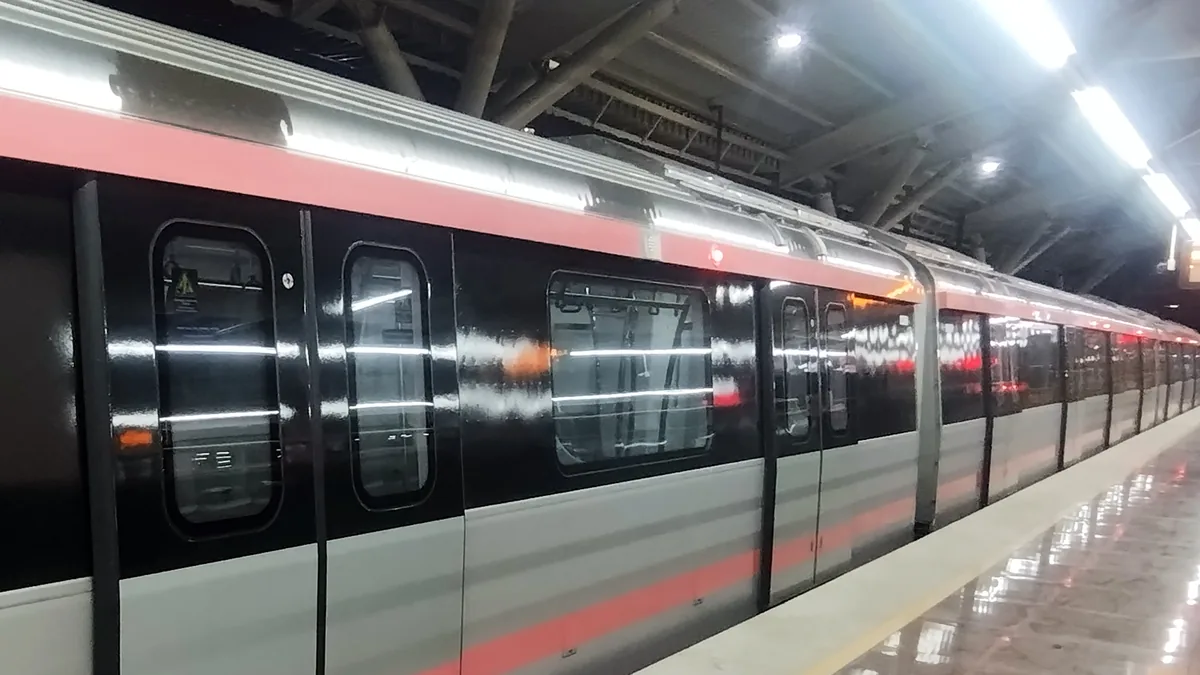
Photo: Veera.sj, Wikimedia Commons.
In a decree passed on 29 October 2026 (Smt. P.S. Nirmala v. Varun's Lotus Apartment Owners' Association), the Bengaluru City Civil Court permanently restrained an apartment association from blocking a flat's drainage outlet, water supply, or physical access over disputed pre-auction amenity charges. However, this ruling does not mean auction purchasers inherit zero liability. While associations cannot resort to extra-judicial coercion, historical maintenance arrears, unpaid sinking corpus reserves, and municipal tax liabilities remain subject to civil recovery depending on auction notice disclosures, society registered bye-laws, and Section 55 of the Transfer of Property Act, 1882. Bidders must secure written dues disclosures from both the secured creditor and the resident association prior to remitting final purchase balances.
The court's holding on easement rights and the illegality of physical lockout tactics is analyzed in can an apartment association block access over unpaid dues. Handover inspections for distressed real estate are covered in our 25 final checks before taking possession. This guide dissects the financial liabilities, statutory notice protections, and accounting distinctions auction buyers face after the gavel falls.
The Singhasandra ruling: Landmark relief with financial nuance
In Smt. P.S. Nirmala v. Varun's Lotus Apartment Owners' Association (O.S. No. 4651 of 2020, decided 29 October 2026), the plaintiff purchased a residential apartment in Singhasandra from a housing finance institution under the SARFAESI Act, 2002. Following registered sale deed execution and khata mutation, the purchaser regularly remitted current monthly maintenance charges.
However, the resident association served a demand for ₹1,10,000, claiming historical contributions toward borewell re-drilling and lift renovations completed during the borrower's default, threatening to plug the flat's sanitary outlet if unpaid.
Key Holdings of the XVII Additional City Civil Court:
1. Extra-Judicial Coercion Barred: Blocking sanitary pipes or common access violates easementary property rights.
2. Formal Civil Suit Mandated: An association claiming historical capital recovery must file a recovery suit under civil procedure.
3. Evidentiary Burden: The association failed to produce audited society bills demonstrating capital expenditures incurred specifically for that unit.
While the purchaser won permanent injunctive protection against utility disconnection, the litigation required six years to reach final decree. Prospective bank auction buyers must avoid walking into unbudgeted legal standoffs by auditing liabilities before bidding.
Segregating the 4 categories of apartment dues
Lenders, real estate agents, and apartment management committees frequently blur financial boundaries when presenting demands to incoming auction purchasers:
Apartment Financial Stack:
├── 1. Current Monthly Maintenance (Purchaser's Direct Ongoing Obligation)
├── 2. Historical Operational Arrears (Subject to Notice Disclosures & Limitation)
├── 3. Sinking Fund & Corpus Reserve (Capital Asset Protection Account)
└── 4. Special Ad-Hoc Completion Levies (Civil Claims Requiring Proof & Audits)
1. Current Monthly Maintenance Charges
From the date the bank issues the Sale Certificate and hands over constructive physical possession, recurring operational expenses (diesel generators, common area electricity, security, housekeeping) are the direct legal responsibility of the new owner. Paying current maintenance on time deprives hostile associations of grounds to declare you an active defaulter.
2. Historical Operational Arrears
These represent unpaid monthly charges accumulated while the defaulting borrower was in breach or during the lender's symbolic custody under Section 13(4) of the SARFAESI Act. * Statutory Disclosure Requirement: Under Rule 8(6)(f) of the Security Interest (Enforcement) Rules, 2002, the authorized officer is legally bound to disclose all known encumbrances, litigations, and municipal/society claims in the public auction notice. * The Principle of Notice: If the secured creditor failed to disclose known society dues, the buyer can demand that the lender settle outstanding claims out of the gross auction proceeds prior to releasing the surplus to the borrower. * Limitation Act Defense: Under Article 52 of the Limitation Act, 1963, recovery of unpaid arrears is legally barred after three years from the date the sum fell due, preventing associations from recovering decade-old backlogs.
3. Sinking Fund & Reserve Corpus
Corpus funds are one-time capital deposits intended to earn long-term interest in scheduled bank fixed deposits. If the original borrower defaulted on their initial corpus contribution, the association cannot double-charge an incoming buyer without proving the previous owner never remitted the capital. Demand an audited unit-wise ledger dating back to project inception.
4. Special Ad-Hoc Capital Levies
As demonstrated in the Singhasandra litigation, resident committees frequently fund incomplete developer work (such as sewage treatment plant overhauls or transformer installations) and attempt to recover the cost from incoming auction buyers. Such demands cannot be enforced as operational maintenance—they represent contested contractual claims requiring formal general body resolutions, documented invoices, and civil court decrees.
Deconstructing the "As-Is-Where-Is" clause
Secured lenders universally sell distressed assets under clauses reading "As is where is, as is what is, and whatever there is." Homebuyers wrongly assume this contractual phrase grants the bank complete immunity from unstated liabilities:
- Constructive Notice Limits: In multiple rulings, the Supreme Court of India and High Courts have held that "as is where is" does not authorize a financial institution to suppress material encumbrances known to its recovery managers.
- Pre-Bid Written Representation: Submit a formal written inquiry to the Authorized Officer under Section 13(4) requesting a written schedule of all encumbrances, unpaid electricity dues, water arrears, and pending society maintenance claims.
- Society NOC / Dues Ledger: Visit the building association office prior to submitting your 10% earnest money deposit (EMD). Request a written statement detailing all outstanding claims associated with the specific unit door number.
Step-by-step interactive checklist: Bank auction flat due diligence
Frequently asked questions
Not automatically. Routine monthly maintenance accrued after possession is the buyer's obligation. For historical arrears accrued during the default, liability depends on whether the bank disclosed them in the SARFAESI sale notice and whether the claims fall within the 3-year statutory limitation period under the Limitation Act, 1963.
No. Essential utilities such as sanitary drainage outlets, drinking water lines, and electrical connections constitute vital easementary rights attached to real property. Under the decree in O.S. No. 4651/2020, disconnecting or blocking utilities is an illegal coercive act, and the association must pursue claims through a civil recovery suit.
If you are regularly remitting current maintenance, an association cannot arbitrarily withhold an NOC or deny access to common facilities. You can issue a formal legal notice citing the Singhasandra ruling and Section 55 of the Transfer of Property Act, or petition the jurisdictional Civil Court or Deputy Registrar of Co-operative Societies.
Under Article 52 of the Limitation Act, 1963, a lawsuit for the recovery of money for arrears of rent or maintenance must be instituted within three years from the date the arrears became due. Uncollected maintenance charges older than three years become legally time-barred debt that cannot be enforced in a court of law.
If the bank had prior notice of the society's claim or failed to exercise mandatory statutory due diligence under SARFAESI Rule 8(6), the auction buyer can petition the Debt Recovery Tribunal (DRT) under Section 17 to direct the secured creditor to discharge the encumbrance from the sale realization before distributing surplus funds.
A sinking fund is an established capital reserve account mandated under apartment bye-laws for structural replacements. An ad-hoc amenity charge represents an extraordinary expense (such as replacing a failed borewell or repainting a facade) funded by individual residents when a developer abandoned the project. Such ad-hoc charges must be individually proved and apportioned.
For authoritative playbooks on distressed property diligence and association rights, explore: - Can an Apartment Association Block Flat Access Over Unpaid Dues? Court Ruling - 25 Essential Pre-Possession Inspection Checks - Karnataka Apartment Act 2026: Comprehensive Legal Status - Sale Agreement & Title Deed Verification Standards
Legal Notice: This guide provides analytical commentary on reported civil court decrees and SARFAESI statutory procedures. It does not constitute formal legal counsel. Auction bids, encumbrance verification, and DRT appellate remedies require case-specific vetting by a practicing banking and real estate attorney.
Accounting Notice: Discharged maintenance arrears, capitalized corpus payments, and auction price adjustments carry direct capital expenditure and tax deduction implications under the Income-tax Act. Consult a Chartered Accountant regarding cost-of-acquisition structuring.
Sources
- City Civil and Sessions Court, Bengaluru: Smt. P.S. Nirmala v. Varun's Lotus Apartment Owners' Association, O.S. No. 4651 of 2020 (Decided 29 October 2026)
- PropNewz Legal Analysis: Bengaluru Court Restrains Apartment Association from Blocking Utility Outlets Over Dues (8 Nov 2026)
- The Securitisation and Reconstruction of Financial Assets and Enforcement of Security Interest Act, 2002 (SARFAESI): Rule 8(6) Security Interest Enforcement Rules, India Code
- The Limitation Act, 1963: Article 52, Recovery of Debts & Arrears, India Code