Short answer: Cauvery water Stage 5 areas are the 110 villages added to Bengaluru's civic limits in 2007, across eight old zones: Yelahanka, Yeshwantpura, Bengaluru South, Byatarayanapura, Dasarahalli, Mahadevapura, RR Nagar and Bommanahalli. Being in the zone isn't the same as having water at the tap. By May 2026, about 1.15 lakh of 1.8 lakh buildings were connected.
- Coverage: 110 villages in eight erstwhile BBMP zones. The project was commissioned on 16 Oct 2024.
- Capacity vs supply: Stage 5 can draw up to 775 MLD, but BWSSB said in May 2026 it had been drawing about 350 MLD and was raising this to 400–450 MLD.
- Connections: 1.15 lakh buildings connected and 30,000 in process, out of an estimated 1.8 lakh (May 2026).
- What you pay: a pro-rata charge reported at ₹400 per sq m of built-up area, plus a one-time beneficiary charge of ₹5,000 to ₹30,000 per flat in the 110 villages.
- The check that matters: a recent BWSSB bill or connection record for the building, not a brochure line saying "Cauvery water".
- What is Cauvery Stage 5?
- Which areas does Cauvery Stage 5 cover?
- Is Cauvery water actually reaching homes?
- The three-gate check (our framework)
- What does a BWSSB connection cost in a Stage 5 area?
- What mistakes do buyers make with Cauvery Stage 5?
- What to do if...
- Cauvery Stage 5 buyer checklist
- Frequently asked questions
- Talk it through with acre&key
- Sources
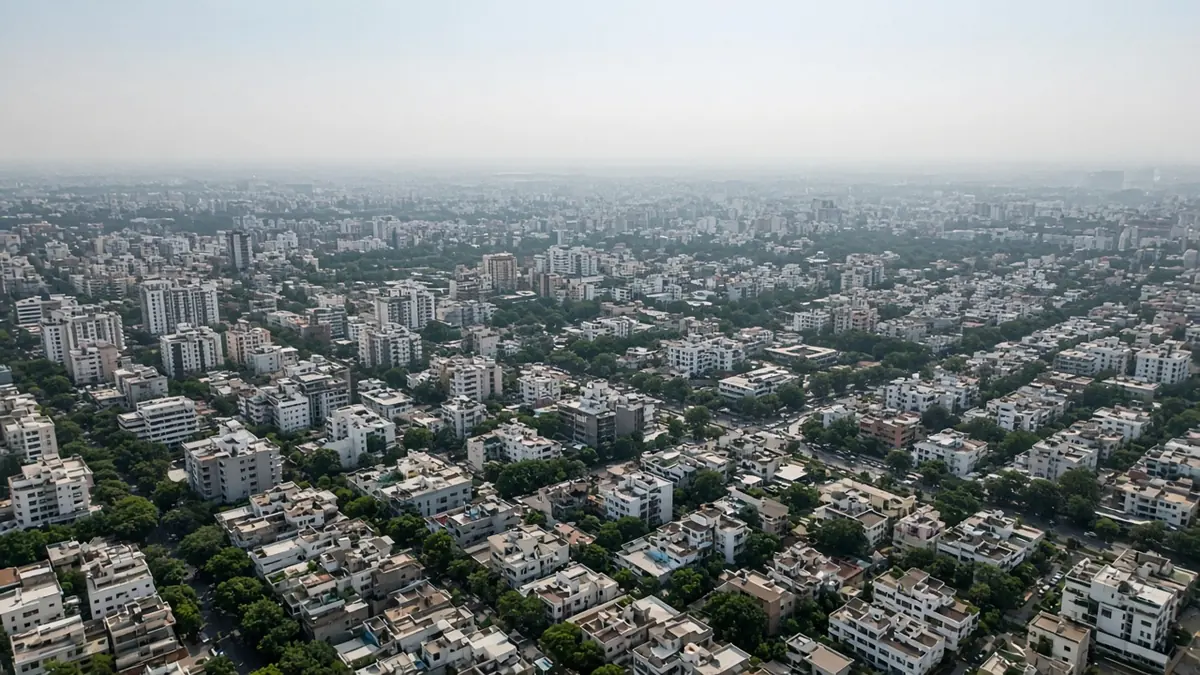
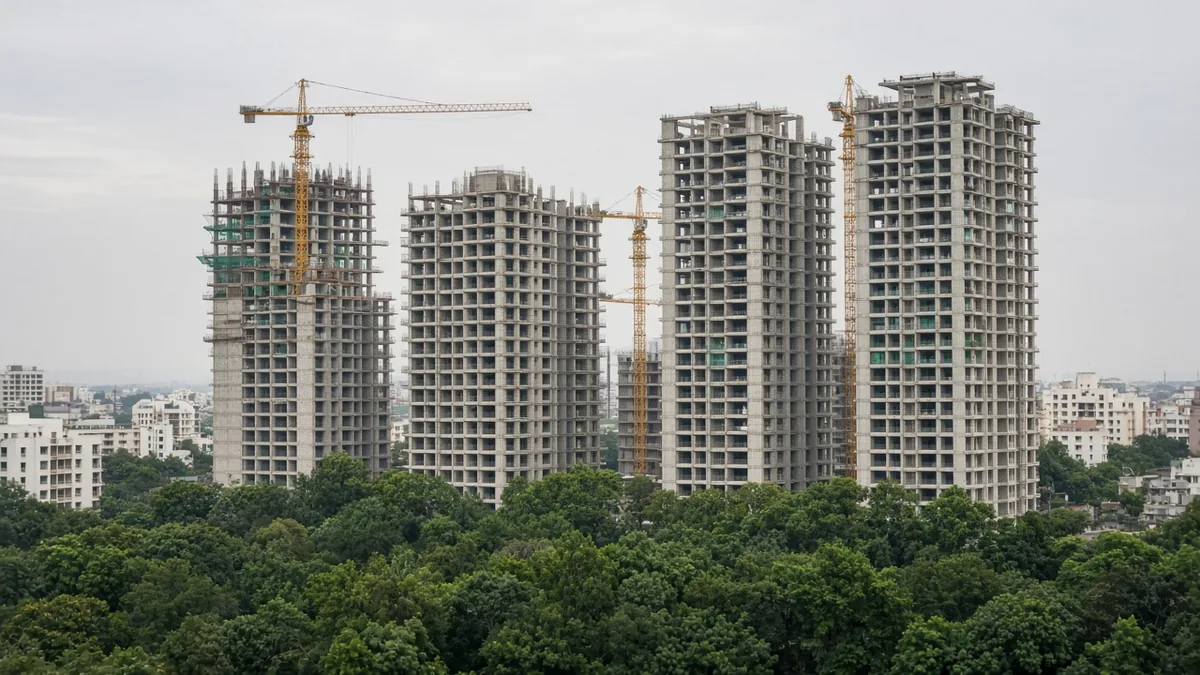
If you're looking at a flat in Whitefield, Mahadevapura, Yelahanka, the outer south or RR Nagar, you've probably heard "Cauvery Stage 5 is coming" or "it's already here". Both can be true in the same ward. This guide shows what Stage 5 covers, what it doesn't, and how to check one building.
What is Cauvery Stage 5?
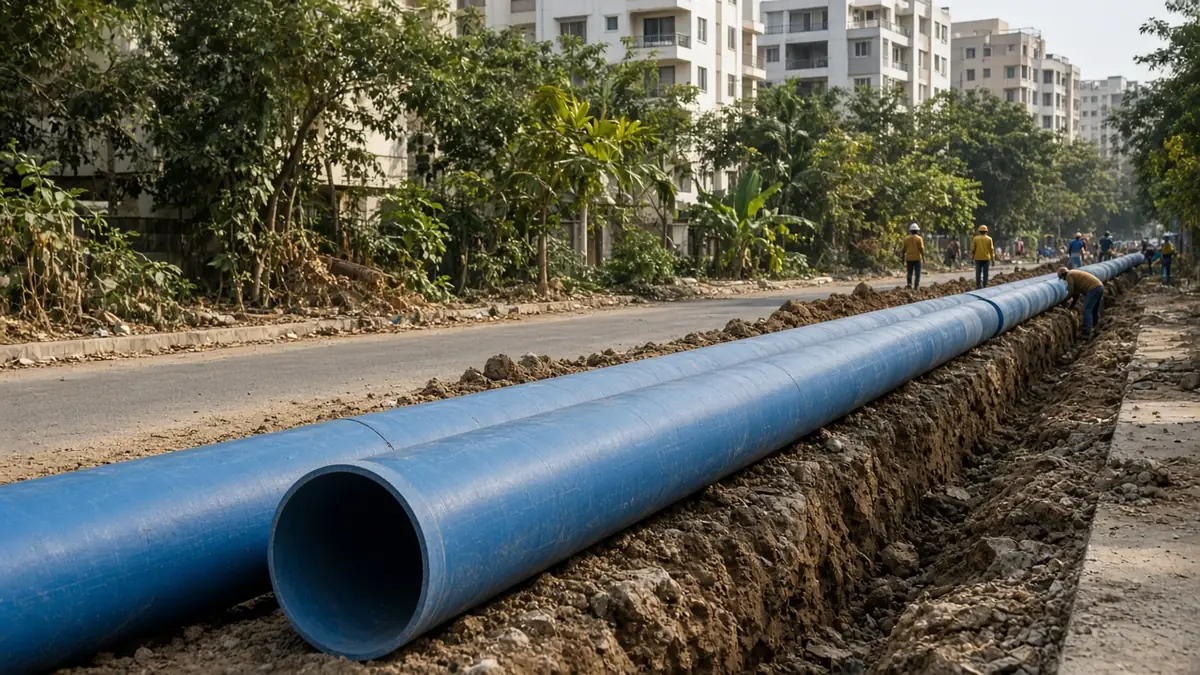
Cauvery Stage 5 is BWSSB's water supply project for Bengaluru's outer areas. It's also called the Bengaluru Water Supply and Sewerage Project (Phase 3), funded by a JICA loan of JPY 81,060 million, around ₹4,336 crore. It was unveiled on 16 Oct 2024 at T.K. Halli. The aim is 50 lakh new beneficiaries through 4 lakh new connections in 110 villages (JICA, 16 Oct 2024).
The 110 villages were added to the city's civic limits in 2007. They got piped Cauvery water only from 2024 (The Hindu, 14 May 2026).
Which areas does Cauvery Stage 5 cover?
JICA lists these eight zones of the former BBMP, with the aim of "supplying Cauvery Water to every single house" in them (JICA):
| Zone (old BBMP name) | Who this usually matters to |
|---|---|
| Yelahanka | North Bengaluru buyers towards the airport side |
| Yeshwantpura | North-west fringe |
| Bengaluru South | Outer south villages |
| Byatarayanapura | North, around the Hebbal–Yelahanka belt |
| Dasarahalli | North-west, along Tumakuru Road |
| Mahadevapura | East, including the Whitefield belt |
| Rajarajeshwari Nagar | South-west |
| Bommanahalli | South-east |
Two things to keep in mind:
- These are old BBMP zone names. Since 2025 the city has five corporations under the GBA, with 369 wards. Your flat's current ward won't match these zone names directly. Our ward and city corporation lookup guide and GBA explainer explain the change.
- Only villages inside those zones are covered, not whole zones. Older parts of these zones may already have had Cauvery water from earlier stages.
Is there an official village list?
We couldn't find a published BWSSB list of all 110 villages on an official site. We're not going to make one up. What has been reported: in January 2025, BWSSB said 104 of the 110 villages had received water and six were pending over land issues. Earlier reporting named eight pending villages: K Narayanapura, Geddalahalli, Byrathi, Bilishivale, Chokkanahalli, Thirumenahalli, Bellahalli and Kattigenahalli (Citizen Matters). That list is dated, so check the status of any of these villages today with your BWSSB sub-division.
Areas outside the 110 villages and outside city limits (for example many BMRDA-region projects near Devanahalli or Hoskote) aren't part of Stage 5. Water there depends on the local body, borewells and tankers.
Is Cauvery water actually reaching homes?
Partly, and rising. Here's what BWSSB's chairman told The Hindu in May 2026:
| Measure | Figure | Source |
|---|---|---|
| Stage 5 maximum draw | 775 MLD | The Hindu, 14 May 2026 |
| Actually drawn so far | About 350 MLD | Same |
| Being raised to | 400–450 MLD | Same |
| Buildings in the area (estimate) | 1.8 lakh | Same |
| Buildings connected | 1.15 lakh | Same |
| Connections in process | 30,000 | Same |
| Target connections by 2028 | 3 lakh | Same |
| First-year new connections (to Oct 2025) | 87,000 | The Hindu, 8 Oct 2025 |
Do the maths. 1.15 lakh of 1.8 lakh buildings is about 64% connected. With the 30,000 in process, that's about 81%. On the supply side, 350 MLD is about 45% of the 775 MLD capacity. BWSSB also said it intends to supply water three times a week in some areas, so a connected building isn't necessarily getting daily water.
The gap is filled by BWSSB's Sanchari Cauvery tankers, started in May 2025. A resident quoted ₹1,290 for 12,000 litres; private tankers were around ₹1,400 for 12,000 litres and ₹800–₹900 for 6,000 litres (same Hindu report).
The three-gate check (our framework)
Most buyers stop at the first gate. You need all three.
- Gate 1: Is the property in a Stage 5 village? This tells you water is planned. Confirm the village and current ward from the khata or tax record, then ask the BWSSB sub-division.
- Gate 2: Has the distribution line reached the road? Ask the BWSSB sub-division or neighbouring buildings. In connected villages, the last stretch can still lag.
- Gate 3: Does this building have a connection, and is water actually flowing? Ask for the BWSSB connection number, the demand note and payment receipt, and two or three recent bills showing metered use. A bill with real consumption is the strongest evidence.
For a new project, add a fourth question: who pays for the connection, and is it in the agreement?
What does a BWSSB connection cost in a Stage 5 area?
BWSSB raises a demand note after inspection, listing pro-rata charges, GBWASP charges and the rest (BWSSB connection FAQ). The rates below are as published by Citizen Matters from BWSSB data; BWSSB's own rate page is a dynamic portal we couldn't capture as a document, so confirm the live rate on your demand note.
| Charge | Rate | Applies to |
|---|---|---|
| Pro-rata (one-time, non-refundable) | ₹400 per sq m of total built-up area (residential); ₹600 per sq m (commercial) | Apartments and high-rises regardless of site area |
| Beneficiary contribution charge (one-time) | ₹5,000 (up to 600 sq ft), ₹10,000 (600–1,200), ₹20,000 (1,200–2,400), ₹30,000 (above 2,400) per flat | 110 villages only |
| GBWASP charge | ₹4,000 to ₹24,000 per flat by built-up area | Former CMC areas and Kengeri |
| Application fee | ₹100 | All |
Source: Citizen Matters. The Karnataka High Court has upheld BWSSB's power to collect pro-rata charges as a capital contribution under s.89A of the BWSS Act (HC judgment, 2026).
Worked example 1: one flat's share
An illustrative 1,150 sq ft built-up flat in one of the 110 villages.
| Item | Working | Amount |
|---|---|---|
| Built-up area in sq m | 1,150 ÷ 10.764 | 106.84 sq m |
| Pro-rata | 106.84 × ₹400 | ₹42,735 |
| Beneficiary contribution (600–1,200 sq ft band) | slab | ₹10,000 |
| Total of these two | ₹52,735 |
Meter, deposit, inspection and sewerage charges come on top, and the pro-rata is charged on the building's total built-up area, so common areas may push your share up.
Worked example 2: why the builder's "BWSSB charges" line matters
An illustrative 200-flat building, all 1,150 sq ft.
| Item | Working | Amount |
|---|---|---|
| Pro-rata on flats alone | 200 × ₹42,735 | ₹85,47,000 |
| Beneficiary contribution | 200 × ₹10,000 | ₹20,00,000 |
| Total | ₹1,05,47,000 |
That's over ₹1 crore for one building before meters and common areas. If your agreement says "BWSSB charges extra at actuals", ask for an estimate per flat and whether it's been paid. If it's already paid, ask for the receipt. Our answer on the BWSSB connection for new apartments covers the process.
What mistakes do buyers make with Cauvery Stage 5?
- Treating "Stage 5 area" as "has Cauvery water". It's planned coverage, not proof.
- Trusting a brochure. Ask for the connection number and bills.
- Assuming daily supply. Some areas may get water three times a week.
- Ignoring the connection charge. It can run to tens of thousands per flat.
- Assuming BMRDA-area projects are covered. Stage 5 serves villages within city limits.
What to do if...
...the building has no BWSSB connection yet? Ask the builder for the application number and demand note, get a written date, and budget for tankers. Factor this into what you'll pay to live there.
...it's a resale flat with a connection? Ask for the last three bills and check they show metered use, not a flat minimum.
...the village is one of the pending ones? Ask the BWSSB sub-division for current status before you pay a token.
...the builder says the charges are "included"? Get it written in the agreement.
Cauvery Stage 5 buyer checklist
- [ ] Village and current ward confirmed from khata or tax records
- [ ] Village is in Stage 5 (confirm with BWSSB sub-division)
- [ ] Distribution line on the road confirmed
- [ ] BWSSB connection number, demand note and receipt seen
- [ ] Two or three recent bills with metered consumption
- [ ] Supply days per week asked of residents or the association
- [ ] Who pays the connection charges written in the agreement
- [ ] Backup plan costed: borewell, Sanchari Cauvery, private tankers
Water is one of the checks in our before-token checklist. Flood risk often sits in the same outer villages, so read our flood-prone areas guide alongside this. The full purchase sequence is in how to buy a flat in Bengaluru, step by step, and the full cost list is in our total cost of a flat guide. To see how water fits a broader risk score, try the property risk assessment calculator.
Frequently asked questions
The 110 villages added to Bengaluru's civic limits in 2007, in eight former BBMP zones: Yelahanka, Yeshwantpura, Bengaluru South, Byatarayanapura, Dasarahalli, Mahadevapura, RR Nagar and Bommanahalli, according to JICA, which funded the project. An official village-by-village list wasn't found on a BWSSB site.
It can draw up to 775 MLD from the Cauvery. In May 2026, BWSSB's chairman said the Board had been drawing about 350 MLD under Stage 5 and was raising this to 400–450 MLD, with some areas getting water three times a week.
No. In May 2026, BWSSB said about 1.15 lakh of an estimated 1.8 lakh buildings had connections, with another 30,000 in process. That's about 64% connected, and some connected areas get water only on certain days. Check the specific building's connection number and recent bills before you buy.
A one-time charge in the 110 added villages: ₹5,000 per flat up to 600 sq ft, ₹10,000 for 600 to 1,200 sq ft, ₹20,000 for 1,200 to 2,400 sq ft, and ₹30,000 above that, as reported by Citizen Matters. It's on top of the pro-rata charge.
It's reported at ₹400 per sq m of total built-up area for residential buildings, including apartments, and ₹600 per sq m for commercial. For an illustrative 1,150 sq ft flat, that's about ₹42,735. Your demand note from BWSSB is the final figure.
Stage 5 serves the 110 villages within the former BBMP limits. Projects in the wider BMRDA region, such as many near Devanahalli or Hoskote, aren't in that list, so water depends on the local body, borewells and tankers. Check each project with the local authority.
A BWSSB tanker service started in May 2025 to fill gaps where piped supply hasn't reached. The Board said it had delivered over 30,000 tankers by April 2026. A resident quoted ₹1,290 for 12,000 litres, against about ₹1,400 from private tankers.
Lawyer note: Agreement clauses on who pays connection charges are general information. Confirm with a property lawyer before you sign.
Sources
Checked 19 Oct 2026.
- JICA press release, unveiling of Cauvery Stage 5, 16 Oct 2024: https://www.jica.go.jp/english/overseas/india/information/press/2024/1553733_53431.html
- The Hindu, piped connections and Sanchari Cauvery reduce tanker demand, 14 May 2026 (news): https://www.thehindu.com/news/national/karnataka/bengalurus-water-woes-piped-connections-sanchari-cauvery-reduce-tanker-demand/article70978412.ece
- The Hindu, a year since Cauvery Stage V, 87,000 new connections, 8 Oct 2025 (news): https://www.thehindu.com/news/national/karnataka/in-a-year-since-cauvery-stage-v-was-commissioned-87000-got-new-connections/article70139770.ece
- Citizen Matters, promise of Cauvery Stage V (pending villages) (news): https://citizenmatters.in/promise-of-cauvery-stage-v-bengalureans-to-be-worry-free/
- Citizen Matters, what it costs to get a BWSSB connection (rates from BWSSB) (news): https://citizenmatters.in/explained-what-it-costs-to-get-a-bwssb-connection-in-bengaluru/
- BWSSB online water connection FAQ: https://owc.bwssb.gov.in/member/faq
- Karnataka High Court judgment on pro-rata charges, s.89A BWSS Act (2026): https://www.thebengalurulive.com/wp-content/uploads/2026/03/KAHC010280362016_1.pdf