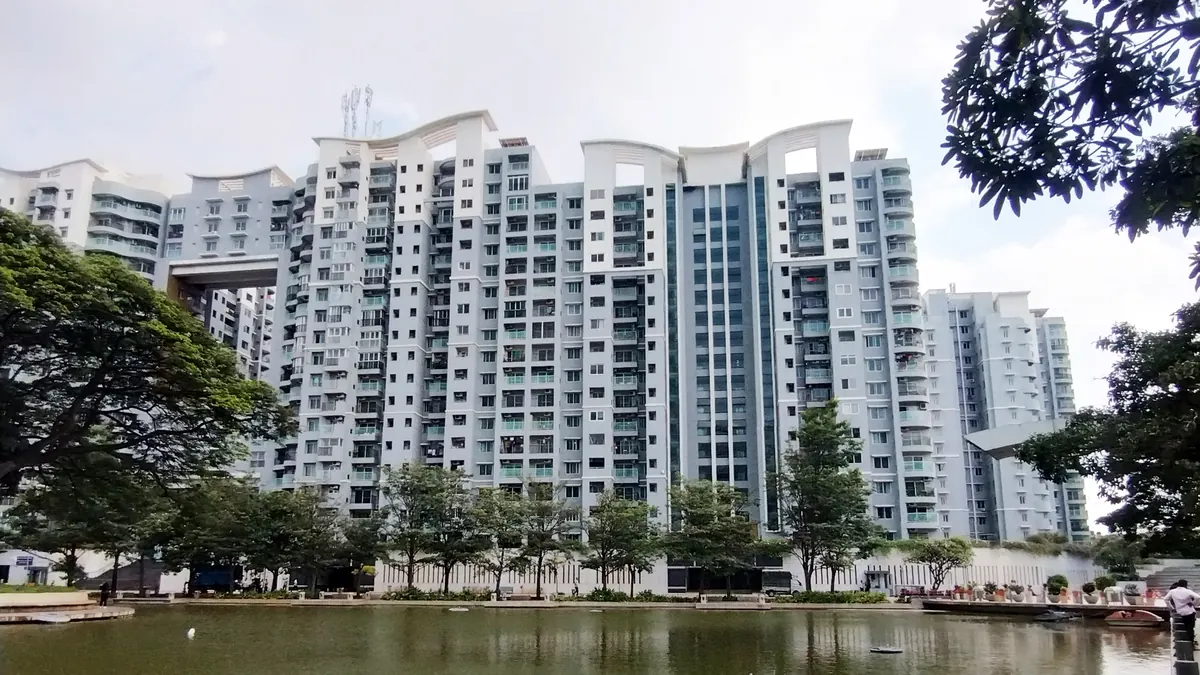
Photo: Gpkp, Wikimedia Commons, CC BY-SA 4.0.
A snag list that builders actually rectify is an itemized, photographic audit tied directly to Section 14(3) of RERA, not a casual chat message. Every defect must carry an exact grid location, photographic proof, defect categorization, and a mandatory 30-day statutory rectification deadline.
Disclosure: acre&key's advice is free to buyers. We're an authorised sales partner for some projects and may be paid by the developer.
When taking possession of a new apartment in Bengaluru, buyers frequently compile unstructured complaint lists on messaging apps or verbally point out defects to on-site project engineers. When the site team moves on to the next construction phase, these informal requests disappear, leaving homeowners to pay out-of-pocket for damp walls, hollow floor tiles, plumbing leaks, and electrical imbalances.
To compel a developer to spend resources rectifying defects, your snagging report must be prepared as a formal engineering audit. When backed by Section 14(3) of the Real Estate (Regulation and Development) Act 2016, a structured snag list creates legal obligations that a promoter cannot dismiss.
The Statutory Power of RERA Section 14(3)
Many builder-buyer agreements attempt to restrict defects to an informal "30-day cosmetic warranty" or a 1-year limited fittings warranty. Under Indian law, statutory enactments override restrictive contractual clauses.
                    ┌────────────────────────────────────────────────────────┐
                    │            RERA SECTION 14(3) DEFECT TIMELINE          │
                    └────────────────────────────────────────────────────────┘
                                                 │
         ┌───────────────────────────────────────┴───────────────────────────────────────┐
         ▼                                                                               ▼
┌─────────────────────────────────┐                             ┌─────────────────────────────────┐
│     5-YEAR NOTICE WINDOW        │                             │    30-DAY STATUTORY RECTIFY     │
├─────────────────────────────────┤                             ├─────────────────────────────────┤
│ • Structural cracks & settlement│                             │ • Developer must rectify at own │
│ • Workmanship & finishing flaws │                             │   cost within 30 calendar days  │
│ • Plumbing seepage & dampness   │                             │ • Failure entitles allottee to  │
│ • Electrical & fixture defects  │                             │   RERA compensation claim       │
└─────────────────────────────────┘                             └─────────────────────────────────┘
Section 14(3) states that in case any structural defect or any other defect in workmanship, quality or provision of services or any other obligations of the promoter as per the agreement for sale relating to such development is brought to the notice of the promoter within a period of five years by the allottee from the date of handing over possession, it shall be the duty of the promoter to rectify such defects without further charge, within thirty days.
The 4 Primary Snag Categories to Inspect
A thorough apartment audit requires systematic testing across four physical domains:
| Category | Primary Test Technique | Common Critical Defects Found | Regulatory & Material Standard |
|---|---|---|---|
| Civil & Finishing | Tapping mallet, spirit level, laser distance meter | Hollow vitrified floor tiles, uneven plaster, unlevel balcony slopes | IS 1443 (laying of tiles), IS 1661 (cement plastering) |
| Plumbing & Sanitary | Pressure gauge, food-dye drainage flood test | Concealed pipe seepage, negative balcony floor traps, leaking valves | National Building Code (NBC) Part 9 Plumbing Services |
| Electrical Infrastructure | Digital multimeter, socket tester with RCD trip | Reversed polarity, non-functional earthing, missing MCB tagging | Indian Electricity Rules 1956, IS 732 wiring installation |
| Fenestration & Hardware | Feeler gauge, water spray nozzle on closed sash | Air/water leaks around UPVC sliding tracks, misaligned lock cylinders | Sound and rain barrier gaskets per wind load codes |
The Standard Snag Audit Format
Do not submit paragraphs of text. Format your report as an itemized table where every single defect has its own dedicated tracking row:
+---------+------------------+-----------------------+-------------------+----------------+-------------+------------+
| Snag ID | Room / Zone      | Defect Description   | Photographic Ref  | Severity Tier  | RERA Status | Close Date |
+---------+------------------+-----------------------+-------------------+----------------+-------------+------------+
| SN-01   | Master Bedroom   | 4 hollow floor tiles  | Photo_01_MBR.jpg  | Moderate       | Open (30d)  | Pending    |
| SN-02   | Common Bathroom  | Reverse drain slope   | Video_02_CB.mp4   | Critical       | Open (30d)  | Pending    |
| SN-03   | Utility Balcony  | Missing exterior seal | Photo_03_Balc.jpg | Minor          | Open (30d)  | Pending    |
+---------+------------------+-----------------------+-------------------+----------------+-------------+------------+
Essential Submission Metadata
At the head of your document, state clearly: - Project Name & Karnataka RERA Registration Number: (e.g., PRM/KA/RERA/...) - Unit Number & Tower: - Allottee Full Name(s): Matching the registered Agreement for Sale. - Physical Inspection Date: - Key Handover / Possession Date: Documenting the start of the 5-year clock.
Interactive Snag Audit Checklist
Conduct a room-by-room audit using this 10-point technical checklist before signing any handover documents:
Frequently asked questions
No. You are legally entitled to record the true physical state of the apartment at the time of key handover. If the developer's staff insists on an unconditional "no claims" letter, write clearly in pen above your signature: "Possession taken subject to rectification of the open snag list dated [Date] submitted under RERA Section 14(3)."
Under Section 14(3) of RERA, if the promoter fails to rectify defects within 30 days, the aggrieved allottee is entitled to receive appropriate compensation. You can file a formal complaint before the Karnataka Real Estate Regulatory Authority (K-RERA) for enforcement or monetary damages.
Section 14(3) covers structural defects, workmanship, quality, and provision of services. While major structural cracks and dampness clearly fall within the 5-year statutory period, cosmetic defects like surface paint chips or minor drywall scuffs should be documented and rectified during the initial pre-possession snagging phase before moving furniture inside.
For modern high-rise apartments, engaging an accredited home inspection agency is often well worth the nominal fee (typically ₹8,000 to ₹18,000 depending on apartment size). Professional inspectors use infrared thermal imaging cameras, acoustic mallets, ultrasonic pipe detectors, and socket testers to uncover concealed defects that visual inspections miss.
No. Taking physical keys or moving into the apartment does not extinguish your statutory rights under Section 14(3). The 5-year defect liability clock begins on the date of handing over possession.
For post-possession operational handovers, consult our guide on moving into a new Bengaluru apartment.
Lawyer note: This article provides technical and procedural information regarding defect rectification under RERA. It is not formal legal counsel. For unrectified structural faults, prolonged developer non-responsiveness, or compensation claims, engage an experienced RERA advocate.
CA note: Retained possession funds, contractual penalty deductions, or RERA compensation payouts carry tax and accounting implications that should be reviewed with your chartered accountant.
Sources
Checked 17 Nov 2026.
- Real Estate (Regulation and Development) Act 2016 (Section 14 on adherence to sanctioned plans and defect liability): https://rera.karnataka.gov.in/resources/staticpage/Real_Estate_Act.pdf
- Karnataka Real Estate Regulatory Authority (K-RERA) Adjudication Rules: https://rera.karnataka.gov.in/
- Bureau of Indian Standards (BIS) - National Building Code of India 2016 (NBC)
- Ministry of Housing and Urban Affairs (MoHUA) Real Estate Guidelines: https://mohua.gov.in/