Short answer: PMAY-U 2.0 eligibility for the home loan subsidy has five tests: family income up to ₹9 lakh, no pucca house anywhere in India, a loan up to ₹25 lakh on a home worth up to ₹35 lakh, carpet area up to 120 sq m, and a loan from 1 September 2024. In Bengaluru, the ₹35 lakh cap bites.
- The subsidy: 4% a year on the first ₹8 lakh of the loan, up to ₹1.80 lakh, paid in five yearly instalments (Interest Subsidy Scheme).
- Resale counts: the scheme covers purchase, re-purchase and construction.
- ₹35 lakh is tight here: at ANAROCK's Q3 2026 city average of ₹9,600 per sq ft, it buys about 365 sq ft. Under ₹80 lakh was about 1% of Q3 launches.
- It stacks: a first-sale flat up to ₹45 lakh pays 5.36% in government charges instead of 7.6%, and 1% GST if it's "affordable".
- Across India, ₹312.38 crore had been released to 70,638 borrowers by February 2026 (PIB).
- Our PUCCA check: pucca house nowhere, under ₹9 lakh, caps on value and loan, carpet area, after 1 September 2024.
- What does PMAY-U 2.0 offer a flat buyer?
- Who counts as a "household"?
- Does it apply where you're buying?
- What can ₹35 lakh buy in Bengaluru?
- How much is the subsidy worth?
- Does it stack with other affordable-housing breaks?
- How do you apply?
- The PUCCA check (our framework)
- Checklist before you apply
- What mistakes do buyers make?
- What should you do if...
- Method notes and limits
- Related reading
- Frequently asked questions
- Talk it through with acre&key
- Sources
PMAY-U 2.0, the second phase of the Pradhan Mantri Awas Yojana for cities, started on 1 September 2024. Of its four parts, only one matters to most private flat buyers: the Interest Subsidy Scheme, which pays part of your home loan interest. This piece sets out the rules from the scheme's own guidelines, then asks the Bengaluru question: what can you actually buy within them?
We used the PMAY-U 2.0 operational guidelines, the scheme portal, PIB releases and ANAROCK's Q3 2026 data. We haven't named any project or developer.
What does PMAY-U 2.0 offer a flat buyer?
The scheme runs through four verticals: beneficiary-led construction, affordable housing in partnership, affordable rental housing and the Interest Subsidy Scheme (ISS) (PIB, 9 Feb 2026). The first three run through local bodies and state agencies. The ISS runs through banks and housing finance companies, so it's the one you can use when you buy from the market.
Under para 5.4 of the operational guidelines:
| Rule | Limit |
|---|---|
| Household income | Up to ₹9 lakh a year (EWS up to ₹3 lakh, LIG ₹3–6 lakh, MIG ₹6–9 lakh) |
| Loan | Up to ₹25 lakh, tenure over five years |
| House value | Up to ₹35 lakh |
| Carpet area | Up to 120 sq m |
| Subsidy | 4% on the first ₹8 lakh, for up to 12 years |
| Maximum paid | ₹1.80 lakh (net present value ₹1.50 lakh at 8.5%), in five equal yearly instalments |
| Loan date | Sanctioned and disbursed on or after 1 September 2024 |
| Purpose | Purchase, re-purchase (resale) or construction |
Who counts as a "household"?
The guidelines define a beneficiary family as husband, wife, and unmarried sons and daughters. Nobody in that family can own a pucca (all-weather) house anywhere in India, and nobody can have been allotted a house under any central, state or local government housing scheme in the last 20 years.
Two other rules matter at registration:
- Whose name. Houses bought with central assistance should be in the name of the female head of the household, or jointly with her husband. Only where there's no adult woman in the family can it be in a man's name alone. Widowers, unmarried or separated people and transgender applicants can hold it in their own name.
- Once per property. The subsidy is paid only once for a property. If you buy a resale flat whose previous owner claimed it, you can't.
Income is self-certified by affidavit, and the guidelines warn of legal action for false declarations.
Does it apply where you're buying?
PMAY-U 2.0 covers all statutory towns and the areas inside notified planning areas and development authority limits (guidelines, para 2.1). That takes in the city and, on our reading, the local planning areas around it, such as Hoskote. A village outside any notified planning area falls under the rural scheme instead. Ask your lender to confirm for your address before you count on the subsidy.
What can ₹35 lakh buy in Bengaluru?
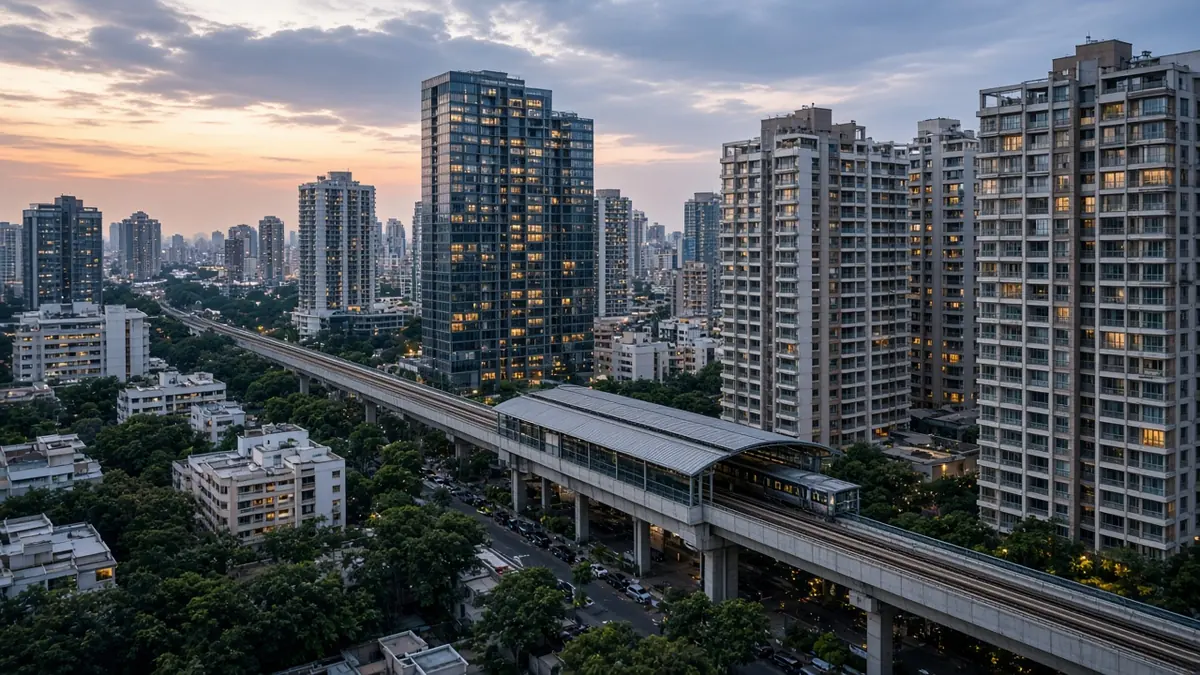
Not much that's new. ANAROCK put the Q3 2026 average base selling price at ₹9,600 per sq ft of super built-up area, and found that homes under ₹80 lakh made up about 1% of new launches. At that average, ₹35 lakh buys about 365 sq ft.
Averages hide a wide range, and the outer belt and resale market run well below the city figure. But the shape is clear. Our Q3 2026 market report has the detail. In practice, PMAY-U 2.0 buyers in Bengaluru are mostly looking at:
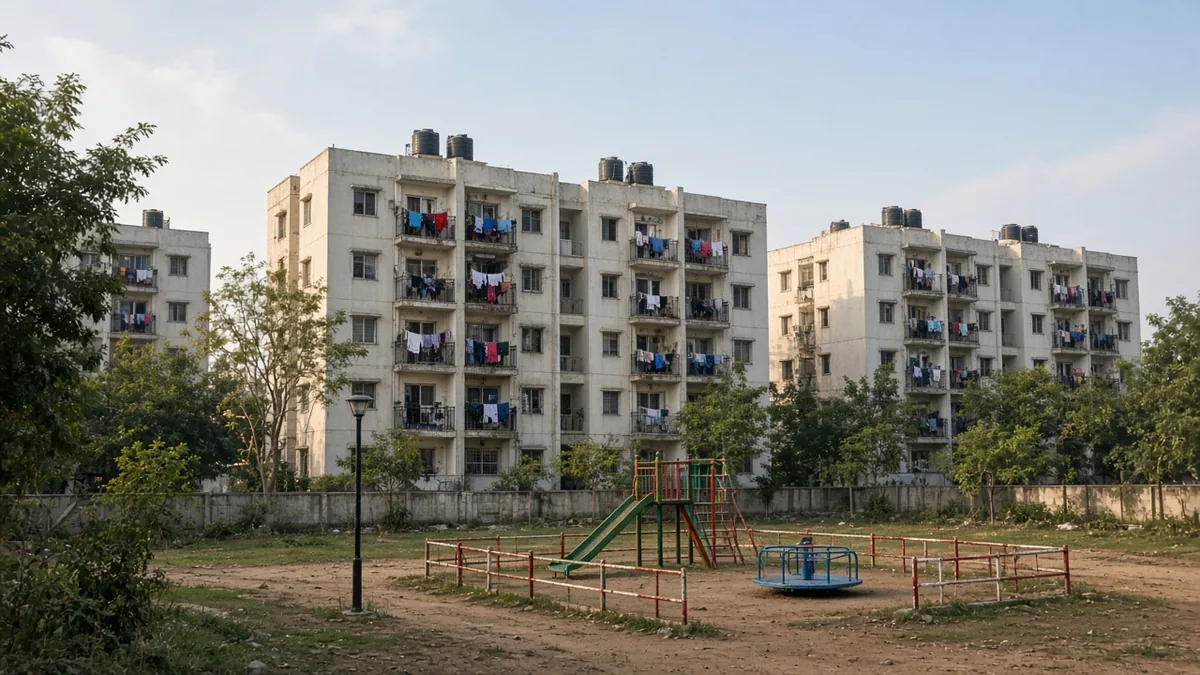
- older resale flats, often smaller one-bedroom units
- compact new flats on the city's edge or in towns such as Hoskote
- building on a plot they already own (the construction route)
The 120 sq m carpet cap almost never bites here. The ₹35 lakh value cap does.
How much is the subsidy worth?
Worked example 1: the subsidy against your EMI
Illustrative. A ₹25 lakh loan at 8.5% over 20 years.
| Calculation | Amount | |
|---|---|---|
| EMI | 25 × ₹867.82 | ₹21,696 a month |
| Total interest over 20 years | ₹21,696 × 240 − ₹25,00,000 | about ₹27.07 lakh |
| Subsidy, maximum | ₹1,80,000 | |
| Each yearly instalment | ₹1,80,000 ÷ 5 | ₹36,000 |
| As a monthly equivalent, for five years | ₹36,000 ÷ 12 | ₹3,000 (about 14% of the EMI) |
| Share of total interest | ₹1.80 lakh ÷ ₹27.07 lakh | about 6.6% |
Useful, not life-changing. The early years, when money's tightest, are when it helps most. By February 2026, ₹312.38 crore had gone to 70,638 borrowers nationally, about ₹44,223 each so far. That's less than the maximum because the instalments are still being paid.
Does it stack with other affordable-housing breaks?
Yes, and that's where the real money is. Karnataka charges less stamp duty on the first sale of a flat worth up to ₹45 lakh, and GST is 1% on an "affordable" under-construction flat (carpet up to 60 sq m in a metro, value up to ₹45 lakh), as our full-cost guide explains.
Worked example 2: new vs resale at ₹34 lakh
Illustrative. Two flats inside GBA, both ₹34 lakh, both PMAY-eligible. The new one is under construction with 55 sq m carpet.
| New flat (first sale) | Resale flat | |
|---|---|---|
| Government charges | 5.36% = ₹1,82,240 | 7.6% = ₹2,58,400 |
| GST | 1% = ₹34,000 | None |
| Upfront taxes | ₹2,16,240 | ₹2,58,400 |
| PMAY subsidy (over five years) | Up to ₹1,80,000 | Up to ₹1,80,000 |
The new flat saves about ₹42,160 upfront. The resale flat is ready now, though, and you can inspect it. Charges are on the higher of price and guidance value, and the 2023 guidance values are still in force, so check the line on Kaveri.
Also check the down payment. The RBI lets lenders fund up to 90% of a property for loans up to ₹30 lakh, but not the stamp duty and registration above ₹10 lakh (RBI Master Circular). On a ₹34 lakh flat with a ₹25 lakh loan, that's ₹9 lakh down plus the taxes.
How do you apply?
- Register your demand on the scheme's unified web portal (PMAY-U 2.0 ISS page), with Aadhaar for every family member.
- The application goes to your chosen lender, which must be a participating lending institution under one of the central nodal agencies.
- Submit the income affidavit and the declarations on house ownership and previous benefits.
- Once the loan is disbursed, the subsidy is released through the nodal agency and your lender in five yearly instalments.
Ask your lender early whether it participates and how it treats the subsidy.
The PUCCA check (our framework)
- Pucca house nowhere. No one in the family owns an all-weather house anywhere in India, and no scheme house in 20 years.
- Under ₹9 lakh. Household income, honestly certified.
- Caps. House value up to ₹35 lakh, loan up to ₹25 lakh, tenure over five years.
- Carpet area. Up to 120 sq m, and up to 60 sq m if you also want 1% GST.
- After 1 September 2024. Loan sanctioned and disbursed on or after that date, with a participating lender.
Checklist before you apply
- [ ] Household defined as the scheme does, and no pucca house owned by anyone in it
- [ ] Income under ₹9 lakh, with documents to back the affidavit
- [ ] House value at or under ₹35 lakh, loan at or under ₹25 lakh
- [ ] Address inside a statutory town or notified planning area (lender to confirm)
- [ ] Property title in the female head's name or jointly, where required
- [ ] For resale: previous owner hasn't claimed the subsidy on it
- [ ] Lender confirmed as a participating institution
- [ ] Approvals, OC and title checked as for any purchase
Our first-time buyer guide, home loan questions, affordability index and legal checks cover the rest. If you're looking at towns on the edge, see our Hoskote guide and our answer on Hoskote home loans. On tax, see our answers on home loan deductions and joint loans.
What mistakes do buyers make?
- Counting a parent's house wrongly. The family is husband, wife and unmarried children. Ask your lender how they'll read your situation.
- Missing the female-ownership rule. Check whose name goes on the deed before you register.
- Buying a resale flat that already had the subsidy. It's once per property.
- Assuming the subsidy reduces the price. It's credited through your lender over five years.
- Ignoring the ₹35 lakh cap's interaction with guidance value. Ask your lender which value it uses if the guidance value is higher than your price.
What should you do if...
...your income is just over ₹9 lakh? You're outside the ISS. The 5.36% charges and 1% GST still apply on a qualifying first-sale flat.
...your spouse owns a small house in your home town? If it's a pucca house, the family is ineligible. Check with your lender.
...your loan was sanctioned before 1 September 2024? It doesn't qualify for PMAY-U 2.0.
Tax points are general information. Confirm with your CA. Eligibility questions go to your lender.
Method notes and limits
- Scheme rules are from the PMAY-U 2.0 operational guidelines (paras 1.3, 1.8, 2.1, 3 and 5.4) and the scheme's ISS page, read on 19 October 2026. National disbursement figures are from PIB, 9 February 2026.
- Price data is ANAROCK's Q3 2026 city average and launch mix. We have no Bengaluru-only count of PMAY-U 2.0 beneficiaries.
- Whether a particular village is in a notified planning area is for your lender to confirm.
Related reading
Frequently asked questions
Household income up to ₹9 lakh a year. The guidelines split it into EWS up to ₹3 lakh, LIG from ₹3 to ₹6 lakh and MIG from ₹6 to ₹9 lakh. The interest subsidy covers all three.
Interest subsidy at 4% on the first ₹8 lakh of the loan, for up to 12 years, capped at ₹1.80 lakh. It's credited through your lender in five equal yearly instalments of ₹36,000.
Yes. The Interest Subsidy Scheme covers purchase, re-purchase and construction. But the subsidy is paid only once per property, so check the previous owner didn't claim it.
₹35 lakh, with a loan of up to ₹25 lakh and carpet area of up to 120 sq m. In Bengaluru, the value cap is the one most buyers hit.
The scheme's family is husband, wife and unmarried children. A pucca house owned by anyone in that family makes you ineligible. Ask your lender how your situation is read.
The guidelines say houses bought with central assistance should be in the female head's name or held jointly with her husband. A man alone can hold it only if there's no adult woman in the family.
Yes. A first-sale flat up to ₹45 lakh pays 5.36% in government charges in GBA instead of 7.6%, and 1% GST if it also meets the affordable test. The interest subsidy comes on top.
It's our five-point eligibility test: no pucca house anywhere, income under ₹9 lakh, value and loan caps, carpet area, and a loan sanctioned on or after 1 September 2024.
Sources
Checked 19 Oct 2026.
- MoHUA, PMAY-U 2.0 operational guidelines: https://pmaymis.gov.in/PMAYMIS2_2024/Operational-Guidelines-of-PMAY-U-2.pdf
- PMAY-U 2.0, Interest Subsidy Scheme page: https://pmaymis.gov.in/PMAYMIS2_2024/PmayISS.aspx
- PIB, affordable housing and PMAY-U 2.0 ISS release figures, 9 Feb 2026: https://www.pib.gov.in/PressReleasePage.aspx?PRID=2225505&lang=1®=1
- PIB, PMAY-U 2.0 eligibility criteria: https://www.pib.gov.in/PressReleasePage.aspx?PRID=2043924&lang=2®=3
- ANAROCK Research, Residential Market Viewpoints, Pan-India Q3 2026: https://investmentguruindia.com/editorial/uploads/news-pdf/12601e58_Q3_2026_Pan_India_Residential_Market_Viewpoints_9cf1a7e616.pdf
- GST Council, FAQ on real estate: https://www.gstcouncil.gov.in/sites/default/files/2024-02/faq-real-estate-sector.pdf
- RBI Master Circular on Housing Finance, 1 Apr 2025: https://www.rbi.org.in/scripts/BS_ViewMasCirculardetails.aspx?id=12824
- Karnataka Stamp Act 1957, Art. 20(2A) (DPAL copy): https://dpal.karnataka.gov.in/storage/pdf-files/34%20of%201957%28E%29.pdf